





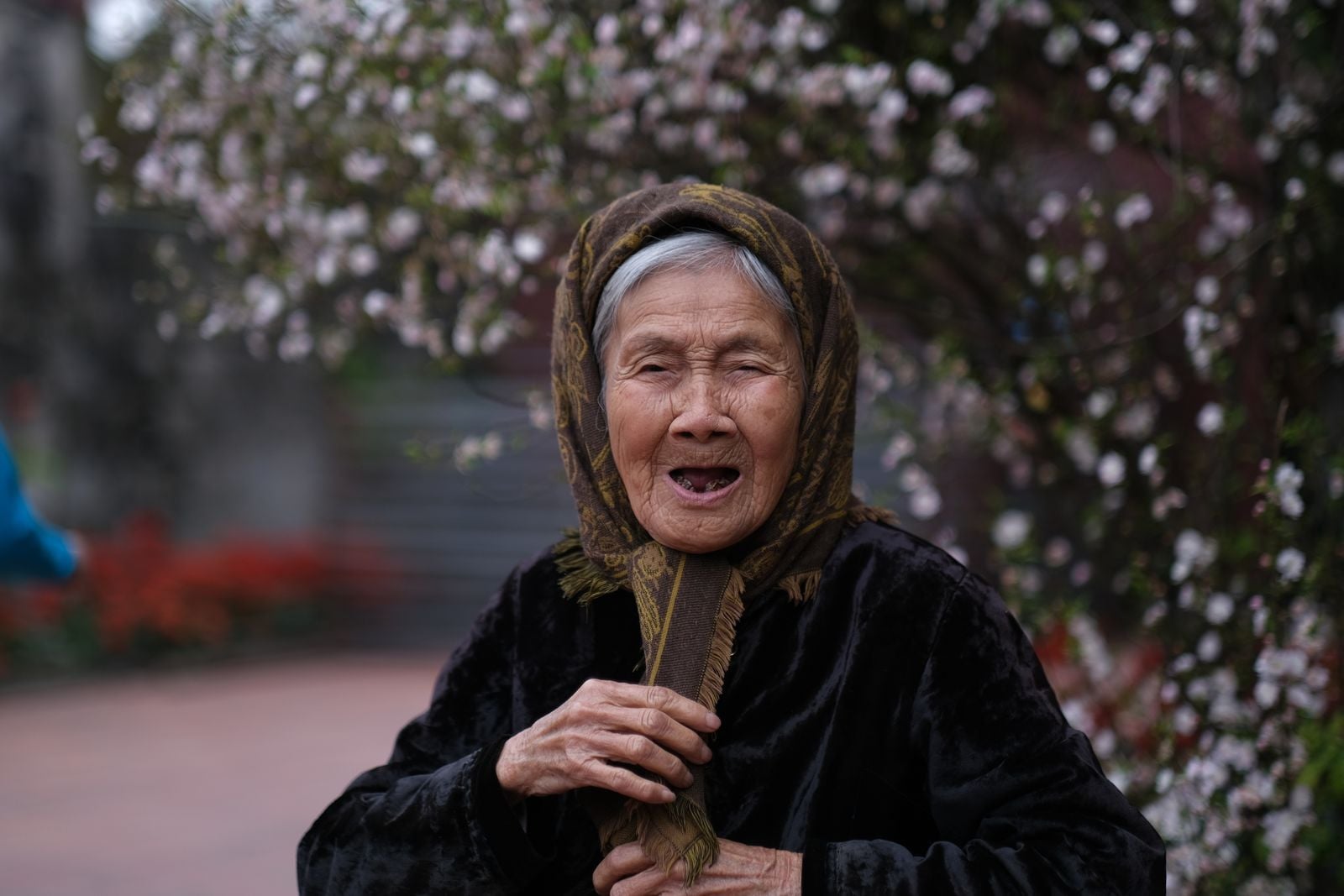
In 1965, a subtropical island chain of roughly 1.3 million people between Kyushu and Taiwan produced more people over the age of 100 per capita than anywhere else on the planet. Sixty-one years later, the grandsons of those centenarians are dying before the Japanese national average. The island is Okinawa. The reversal is one of the fastest population-level health collapses ever documented in a developed economy — and it happened without a war, a famine, or a plague.
Same island. Same genes. Something changed.

The record nobody expected to lose
The Okinawa Centenarian Study, launched in 1975 by physician Makoto Suzuki at the University of the Ryukyus, is the longest continuously running study of people over 100 anywhere in the world. Across five decades it has tracked more than 3,000 participants. What Suzuki and his collaborators — including the physicians Bradley and Craig Willcox — found in the 1970s and 1980s reads today like a rebuke of almost every wellness trend sold since.
The traditional Okinawan diet, in the cohort born before the Second World War, was roughly 85% carbohydrates, 9% protein, 6% fat. Around 60% of daily calories came from a single food: the purple imo, or Okinawan sweet potato. Pork appeared once or twice a month. Fish was modest. Total intake sat near 1,785 calories a day — about 10 to 15% below what modern guidelines recommend for adults of similar build.
The elders did not restrict on purpose. They ate what a poor, isolated island could grow. And they outlived everyone.
The bombs, then the burgers
Okinawa’s dietary rupture has a specific starting point. After the Battle of Okinawa in 1945, the United States military occupied the islands and did not return administrative control to Japan until 1972. During those 27 years, the US built the dense network of bases that still covers roughly 15% of Okinawa’s main island, and with the bases came commissaries, cheap imported beef, Spam, canned meat, refined flour, and sugar.
A generation that had grown up on sweet potatoes and miso raised a generation that grew up on luncheon meat and white bread. By the 1990s, Okinawa had the highest per-capita consumption of hamburgers and canned pork in Japan. The prefecture that had been synonymous with slow food became the prefecture with the country’s highest obesity rates.
The consequence has a name inside Japanese public health circles: 26 shock. In 2000, when the Ministry of Health released prefecture-level life expectancy tables, Okinawan men had fallen to 26th out of 47 prefectures. They had been first for decades. By 2015 they had dropped further. Okinawan men under 65 now die at rates above the Japanese national average from heart disease, liver disease, and metabolic complications — a category of “premature mortality” almost unheard of in the pre-war cohort.
What the centenarians actually did
The temptation is to treat the collapse as a simple morality tale about fast food. The data is messier and more interesting. Writing in Forbes, travel writer Sarah Kingdom describes older Okinawans eating an average of seven servings of vegetables daily and following hara hachi bu — the Confucian-derived practice of stopping when 80% full. Dan Buettner, the researcher who coined the term Blue Zone, recorded a 104-year-old woman getting up and down off a tatami floor thirty times in a single day. That is thirty unassisted squats, performed as furniture policy rather than exercise.
Movement was not scheduled. Gardens were tended past 90. Social groups called moai — five or six friends who commit to each other for life — provided the kind of dense, low-stress connective tissue that Western epidemiology has spent the last decade trying to quantify. A sense of purpose, ikigai, was assumed rather than sought.

None of this transferred to the grandchildren. Cars replaced walking. Office work replaced farming. Convenience stores replaced kitchen gardens. The moai aged out. And the calorie mix inverted: a diet once dominated by complex carbohydrates from tubers became a diet dominated by refined carbohydrates and saturated fat from imported meat.
The cellular arithmetic
Nutrition science has spent 25 years trying to explain, at the molecular level, what the Okinawan elders were doing right. A summary of the field published by Nature’s research index notes that diets high in whole grains, legumes, and vegetables are associated with lower systemic inflammation, better insulin sensitivity, and a gut microbiota tilted away from pro-inflammatory species. Western dietary patterns — the ones the American bases exported — are associated with the opposite: dysregulated lipid metabolism, mitochondrial stress, and higher rates of cardiovascular disease and certain cancers.
A separate Nature summary on dietary acculturation describes an almost identical pattern in immigrant populations who move from traditional plant-heavy diets to Westernised ones: metabolic health degrades within a single generation. Okinawa is unusual only because the acculturation happened without the population moving. The food moved to them.
The longevity ceiling
What happened in Okinawa also sits inside a bigger story about the limits of modern lifespan. A study published in 2025 in the Proceedings of the National Academy of Sciences, led by Héctor Pifarré i Arolas at the University of Wisconsin-Madison with José Andrade of the Max Planck Institute for Demographic Research and Carlo Giovanni Camarda of the Institut national d’études démographiques, found that no generation born after 1939 in 23 high-income countries is projected to reach an average age of 100.
Between 1900 and 1938, life expectancy in wealthy nations climbed by about five and a half months per birth cohort. For cohorts born after 1939, that pace slowed to between two and a half and three and a half months. According to a News-Medical summary of the research, Pifarré i Arolas noted that the dramatic life expectancy gains of the early 20th century are unlikely to be repeated in the foreseeable future.
The early-century gains came from crushing infant mortality. The remaining gains have to come from keeping older adults alive longer, and that turns out to be much harder — especially when the diseases of affluence are still spreading. Okinawa is the extreme case, but the pattern applies to almost every developed economy: the low-hanging fruit has been picked, and the cheeseburger is still on the tray.
Blue zones are not fixed points
The idea that certain places produce reliably long-lived people has always been more fragile than the wellness industry admits. An analysis republished by AOL notes that the world’s blue zones shift as record-keeping improves and old cohorts die out. Sardinia’s mountain villages, Ikaria in Greece, Nicoya in Costa Rica — each has been challenged by newer demographic auditing. Some centenarian counts have turned out to be pension fraud. Others simply reflected a specific generation that lived through a specific set of conditions, and were never going to be reproduced by their children.
Okinawa is the cleanest case study because the collapse is documented in real time. The 1900-born Okinawans who made the island famous were the last cohort to spend their formative years entirely inside the pre-industrial food system. Their children lived through the American occupation. Their grandchildren grew up inside it.
The demographic tail
The consequences extend beyond individual mortality. Japan as a whole is now short of workers to an extent that Silicon Canals has covered in the context of the country’s accelerating deployment of service robots — a response not to labour militancy but to a shrinking working-age population. Okinawa was supposed to be the buffer: a young, high-fertility prefecture with the country’s most robust elder population. Instead its working-age men are dying earlier, its centenarian cohort is thinning, and its economy leans heavily on tourism sold on the reputation of a diet almost no one under 60 still eats.
The wellness industry’s response has been to package the Okinawan lifestyle for export. Purple sweet potato powders, moai-branded friendship apps, ikigai journals, NAD+ supplements marketed to close the cellular gap between an office worker and a 104-year-old gardener. Even the pedometer everyone still uses traces to Japan — Silicon Canals has previously covered how the 10,000-steps target was a marketing figure attached to a 1965 device, not a scientific threshold.
What the accident actually revealed
The unplanned experiment on Okinawa did not prove that carbs are good or meat is bad. It proved something narrower and stranger. A population eating 85% of its calories from tubers, vegetables, and legumes, on about 1,800 calories a day, embedded in dense social groups and daily physical labour, outlived every other documented human population. When you removed the food, the labour, and the social structure — even while leaving the genes and the climate intact — the advantage disappeared inside forty years.
The pre-war Okinawan diet is not, on paper, what a modern nutritionist would prescribe. It was low in protein, low in fat, high in a single starchy vegetable, and calorically restricted by circumstance rather than choice. Half the food pyramids designed in Washington in the last thirty years would have called it deficient. It produced the longest-lived humans ever counted.
The place with the highest life expectancy on Earth right now, meanwhile, is Hong Kong — which also has one of the world’s highest per-capita meat consumption rates. The lesson the Okinawan collapse offers is not a diet. It is a warning about how quickly a population-level health advantage, built over centuries, can be dismantled inside a single lifespan. And how hard it is to build one back.
The men dying young on Okinawa today are the biological children of the longest-lived people ever recorded. Whatever protected their parents was not in the blood. It was in the sweet potatoes, the tatami mats, the walk to the neighbour’s house, and the fact that nobody, in 1955, could get a hamburger.