




There is a widely held assumption that people harden as they age. The tastes settle, the opinions calcify, the appetite for the unfamiliar quietly drains away, until a person becomes the fixed quantity we half expect every older adult to be. The assumption is not baseless. Openness to experience, the personality trait that underpins curiosity and a comfort with the new, does tend to drift downward across adulthood on average. But treating that drift as a law of nature is the mistake, because openness behaves far less like a fixed endowment and far more like a habit, one that can be fed or starved, and that a handful of specific practices can measurably rebuild even late in life.
The trait is more malleable than the stereotype allows
The strongest reason to doubt the hardening story is that researchers have actually moved the trait in the lab. In a study led by Joshua Jackson, older adults who completed a sixteen-week programme of reasoning training supplemented with puzzles showed a measurable increase in openness to experience compared with a control group, making it one of the first demonstrations that a personality trait could be shifted through a non-pharmacological intervention.
That result is worth sitting with, because it reframes curiosity from a temperament you are stuck with to a capacity you can train. What the intervention supplied, underneath the specifics of the puzzles, was sustained engagement with novelty and mild difficulty, the repeated experience of being a beginner at something and working through the discomfort of not yet being competent. The trait rose in response. This suggests that open-mindedness in later life is not primarily a matter of luck or disposition but of what you keep exposing yourself to, and that the drift towards rigidity is at least partly a product of the opposite habit, the slow retreat into the familiar and the already-mastered. If challenge builds openness, then comfort, pursued too consistently, erodes it.
Why the effort is worth making
The case for bothering is not merely that curiosity is pleasant, though it is. Openness appears to protect the very faculty that ageing threatens. In a longitudinal study following middle-aged and older adults over thirteen years, higher openness was associated with better cognitive outcomes across that span, consistent with a broader body of work linking the trait to stronger cognitive reserve.
The mechanism is best understood as a loop rather than a one-way effect. A curious, open person is drawn into novel and effortful activity, learning new skills, entertaining unfamiliar ideas, seeking out situations that stretch them, and that diet of challenge is precisely what builds the cognitive reserve thought to buffer the ageing brain. The stronger mind, in turn, finds novelty more manageable and therefore more inviting, which sustains the openness that started the cycle. The reverse loop is equally self-reinforcing and rather bleaker: retreat from the new, and the faculties that make the new enjoyable weaken, which makes further retreat feel reasonable. Curiosity, on this reading, is not a decoration on a life well aged but part of the machinery that keeps a mind able to age well at all.
The habits that keep the channel open
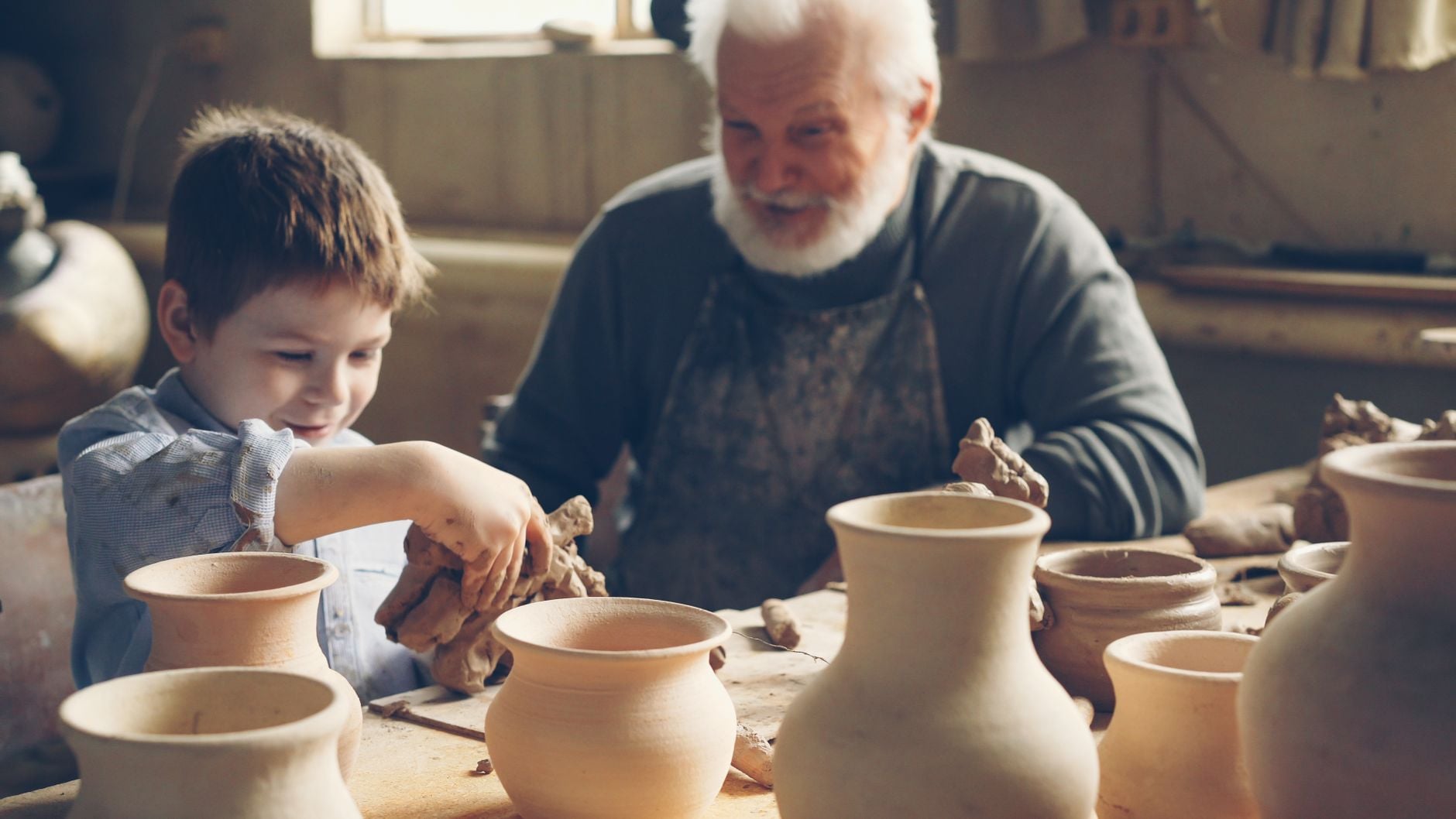
What follows from the evidence is a small set of deliberately uncomfortable practices, none of them exotic. The first is to keep being a beginner on purpose. The strong temptation with age is to do only the things you are already good at, where competence is assured and embarrassment is not a risk, but it is exactly the friction of early incompetence that appears to feed openness. Taking up something you are visibly bad at, and staying with it past the humbling early stretch, is not a detour from staying sharp; it is close to the mechanism itself.
The second is to practise intellectual humility as a discipline rather than a mood. Open-mindedness is not a warm willingness to agree with everyone; it is the harder habit of holding your own conclusions loosely enough to be revised, which means actively seeking out the views you suspect are wrong and treating the discovery that you were mistaken as useful information rather than a defeat. The third, quieter than the others, is to lean into not-knowing instead of closing it down. Curiosity is the willingness to sit inside an unanswered question a little longer than is comfortable, to ask one more question before reaching for the familiar verdict, and this can be cultivated in the smallest daily moments. It is worth being honest, finally, that openness is not an unmixed good. Some of the settledness of age is hard-won judgement rather than mere rigidity, and a mind endlessly open to every idea would never decide anything. The goal is not infinite openness but resistance to the default hardening, keeping one deliberate channel open to the new while the rest of you, quite reasonably, grows more sure of what it knows.