





The loneliest people in most social circles aren’t the ones standing at the edges. They’re the ones at the centre. This is a counterintuitive claim, and most loneliness research still doesn’t fully account for it. The standard model treats loneliness as a deficit of connection. More people, more contact, less pain. But there’s a version of loneliness that only arrives when you’re surrounded by people who genuinely like you, and it comes from a slow, creeping realisation: what they like is a performance you can no longer remember choosing to start.
That performance doesn’t feel like deception, at least not at first. It feels like being good at people. You’re warm, you’re funny, you hold the room together. Everyone relaxes when you walk in. The problem is that “everyone relaxes” is not the same as “everyone knows you.” And the gap between those two things can widen for years before you notice it. By the time you do, the performance has become load-bearing. You can’t remove it without threatening the structure of every relationship you’ve built on top of it.
I know this because I’ve lived it. There was a dinner party in Edinburgh last November. Eight people around a table, good wine, the kind of laughter that comes easily. Someone retold the story of how I’d once talked our way out of a parking fine in the Highlands using nothing but an apologetic smile and a fabricated anecdote about a veterinary emergency. Everyone was laughing. I was laughing. And somewhere between the second and third retelling, I felt something open up beneath me like a trapdoor. Not sadness. Not anger. Something closer to vertigo. The person in that story, the quick-witted, endlessly charming, always-on version of me, was a character I’d been playing so long I couldn’t remember the audition. Everyone at that table loved him. I was sitting there wondering if I’d ever actually met him.
In metallurgy, there’s a phenomenon called stress corrosion cracking. A metal looks perfectly intact on the surface, bearing loads, doing its job. But internally, microscopic fractures have been forming for years, invisible to everyone, caused not by a single catastrophic impact but by the quiet, sustained combination of tension and environment. The metal doesn’t fail because it was weak. It fails because it was strong in a way that was never sustainable. That night at the dinner table, I could feel the fractures.
The conventional wisdom says loneliness is about absence. An empty apartment. A phone that doesn’t ring. A Friday night with nothing scheduled. Most advice about combating loneliness focuses on increasing social contact, as though the problem were purely arithmetic: more people, less lonely.
But that misses the specific ache the title of this piece describes. Some of the loneliest moments people report happen at dinner tables surrounded by friends, at birthday parties thrown in their honour, in group chats where their name gets mentioned with affection. The loneliness isn’t about missing people. It’s about the dawning suspicion that the person everyone is so fond of doesn’t actually exist.

The Performance You Didn’t Audition For
Most social masks don’t begin as lies. They begin as minor adjustments. You notice that when you’re upbeat, people relax around you. When you ask the right questions, people open up. When you absorb someone’s bad mood without flinching, they call you later to say thanks.
Each of these is a tiny reward loop. The psychologist Erving Goffman called this impression management, and writing in Psychology Today, Ronald Riggio describes it as an art that is both universal and potentially dangerous. Everyone engages in it. The danger comes when the gap between the presented self and the actual self grows so wide that the person performing can no longer bridge it.
The problem is that these adjustments compound. Year after year, the upbeat version of you becomes the only version people know. They don’t know they’re relating to a performance because the performance predates the friendship. By the time you realise you’re exhausted by it, you’re also terrified of what happens if you stop.
In my recent piece on every “easy” relationship actually being one where I did all the adjusting, I wrote about how frictionless connections can mask deep asymmetry. This is the social version of the same pattern. When you shape yourself so thoroughly to what others need, you stop generating friction. Everyone, including you, mistakes that smoothness for authentic connection.
Loneliness as a Full Room
I have a friend I’ll call Megan. She is the gravitational centre of every room she enters. She’s a project manager in her mid-thirties, lives in Glasgow, and is the person everyone calls when they need cheering up, planning help, or someone to hold the group together. Her birthday last year had twenty-six people at it. She told me afterward that she went home, sat on the edge of her bed still in her coat, and cried for forty minutes.
“It’s not that they don’t care about me,” she said. “It’s that they care about the version of me that makes everything fun. And I don’t know how to tell them that version is running on fumes.”
Megan isn’t hiding in the corner. She’s the centre of the room. The centrality is part of the trap. She’s spent fifteen years being the reliable one, the upbeat one, the one who asks how everyone else is doing. Nobody thinks to check on her, because the performance is so seamless it looks like a personality.
Silicon Canals has explored how loneliness often looks like someone who laughs at every joke, remembers every birthday, and shows up at every event. That’s Megan. That’s a lot of people I know.
The version of loneliness we’re talking about here is not about quantity of social contact. It’s about what James Hittner and Calvin Widholm, in their meta-analysis of gratitude and loneliness, describe as a discrepancy between social relationships that are desired versus personally experienced. You can have plenty of the latter and almost none of the former. The gap between the two is where this specific brand of loneliness lives.
A 2024 study by Brandon Bouchillon at the University of Arkansas confirmed this with data: younger adults aged 18-39, who reported the greatest friendship quality in their social networks, also reported higher rates of loneliness and lower self-esteem than people over 50. The people with the most connections weren’t the least lonely. They were often the most.
When the Mask Outlives the Reason for Wearing It
Here’s the part that doesn’t get discussed enough. Many people who perform socially started doing so for genuinely good reasons. Children who grow up in volatile homes learn to read the room before they learn to read books. Kids who had anxious or depressed parents learn to be cheerful because someone needed to be. By the time they’re adults, the adaptive strategy has become invisible to them. They don’t remember a time before it.
I think about this sometimes in terms of my own history. Growing up in rural New South Wales, watching my dad work as a GP, I saw something adjacent to this play out in professional form. The town doctor is always composed, always available, always a calm presence. The performance is real in the sense that the care is real. But it’s also a role. The person wearing it can forget that there’s a version of themselves underneath. I absorbed that template without meaning to. By the time I was in my twenties, I’d become the person who held rooms together. The one who smoothed over awkward pauses, defused tensions, made sure everyone was having a good time. It felt like generosity. It was generosity, in a way. But it was also a cage I’d built from the inside, and I’d wallpapered over the door so well I forgot it was there.
What makes this pattern so sticky is that the performance genuinely helps people. Others feel better around you. You are, in a very real sense, doing good. The feedback is positive. The reinforcement is constant.
Who would voluntarily give that up?
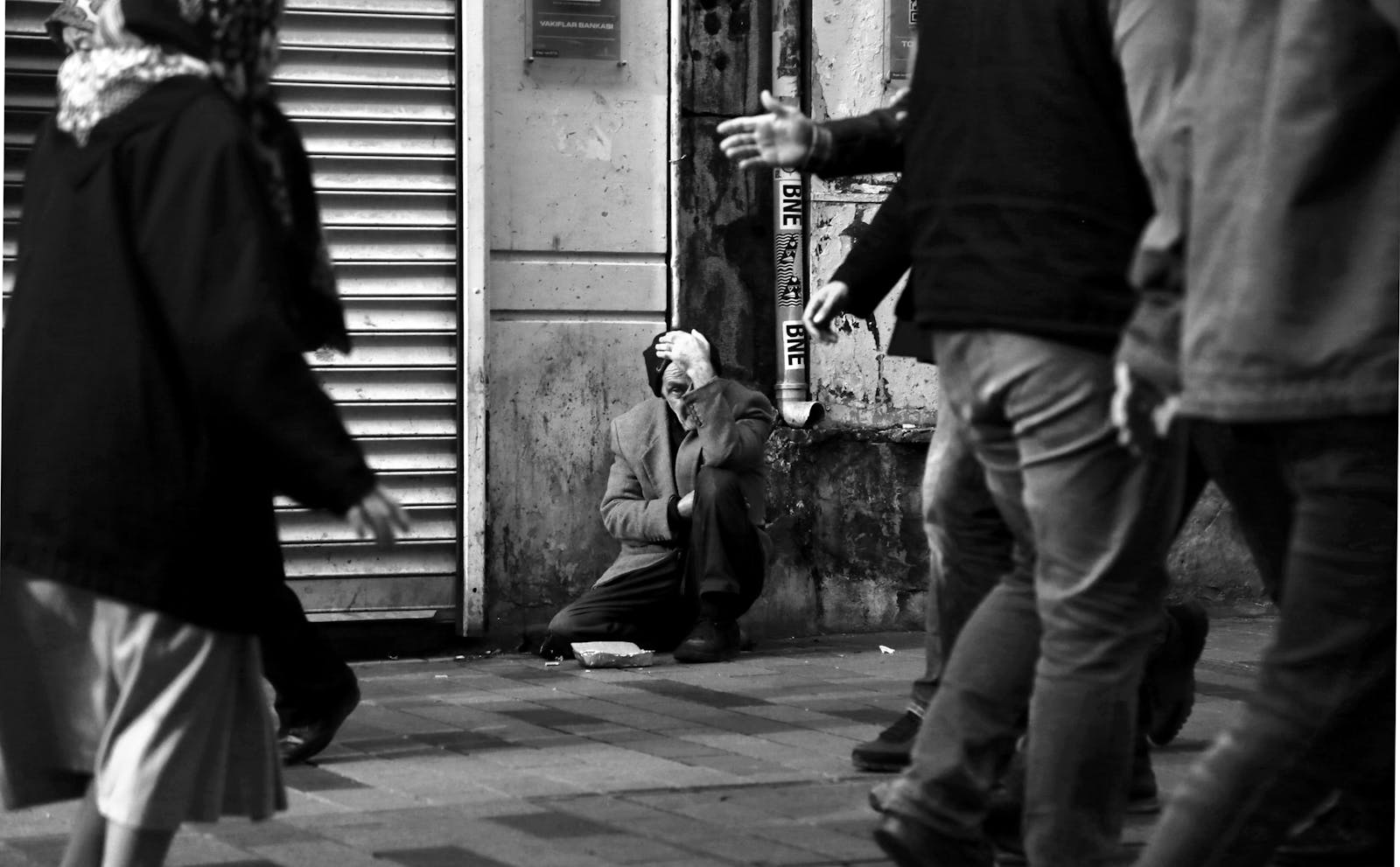
This is where the loneliness of being well-liked becomes structurally difficult to escape. You’re not trapped by rejection. You’re trapped by acceptance of someone who isn’t fully you.
The Moment You Realise You Don’t Know How to Stop
The title of this piece uses the phrase “a performance you can no longer remember choosing to start.” That’s the turning point, and it usually hits in your 30s or 40s. You’re at a gathering. People are laughing. You’re the one who made them laugh. And somewhere between the punchline and the applause, you feel a cold gap open up inside you.
Not sadness. Not anger. Something closer to unreality. The thought: they like this. But what is this?
I talked to a guy I know. I’ll call him David. He runs a small tech consultancy here in Edinburgh. Well-liked, well-connected, a fixture at industry events. He told me he’d started having what he called “bathroom moments.” He’d excuse himself from networking dinners to stand in the bathroom for three or four minutes, not because he needed to use it, but because he needed to stop smiling. “I’d look at myself in the mirror,” he said, “and I wouldn’t recognise the expression on my face. Not because it looked fake. Because it looked real. And I knew it wasn’t.”
David has since cut his social commitments in half. He lost some professional relationships. He describes the process as “controlled demolition.” Tearing down the structures that were built on a version of himself he couldn’t sustain, and seeing what was still standing when the dust cleared.
Researchers studying the emotional challenges of highly sensitive people have found that individuals with high sensory processing sensitivity report greater levels of loneliness even when socially active. These are people who notice more, process more, and feel the gap between surface interaction and genuine connection more acutely. They’re often the ones who build the most elaborate social performances, because they can read what’s needed with uncomfortable precision. David is one of these people. So, I suspect, am I.
A 2025 study examining different loneliness measurement tools found something telling: regardless of whether loneliness was defined by frequency, distress, or duration, it left a consistent psychological footprint. Low self-esteem. Social anxiety. Depression. The person performing happiness at a party and the person sitting alone in an apartment can carry the same internal signature.
That finding dismantles the assumption that socially active loneliness is somehow less valid. It isn’t. The body and brain don’t give you credit for how many people were in the room when the loneliness hit.
Why Dropping the Mask Feels Like Dying
This is the part nobody warns you about. The performance doesn’t just attract people. It attracts a specific kind of attention that becomes load-bearing in your life. Your friendships are built on the version of you that shows up cheerful, competent, and emotionally available. Your relationships are structured around it. Sometimes your career is, too.
Dropping the mask doesn’t feel like relief. It feels like threatening every structure you’ve built. If people only know the performed version, then authenticity looks like betrayal. You’re not just being vulnerable. You’re rewriting the terms of every relationship you have, and you’re doing it without any guarantee that people will stay once they meet the person underneath.
In my piece on chasing approval from people who didn’t have the emotional equipment to give it, I wrote about how the people we perform hardest for are often the least capable of recognising us. The same logic applies here, but it’s broader. When your whole social world is calibrated to a performance, the audience is self-selected. Not everyone in that audience will survive the shift to honesty. Some will. But you have to be prepared for the ones who won’t.
That preparation is terrifying. Which is why so many people keep performing decades past the point of exhaustion.
What Actually Helps
I want to be careful here because the data isn’t clear on any single intervention. But a few things stand out from both the research and the conversations I’ve had.
First, Bouchillon’s work suggests that friendship quality matters more than friendship quantity. Specifically, the sense of genuine camaraderie with even a small number of people correlated with reduced loneliness. Megan, the friend I mentioned earlier, eventually told one person. Just one. How she’d been feeling. That person didn’t fix anything. But for the first time in years, someone was responding to her rather than to the performance. She said it felt like putting down a suitcase she’d forgotten she was carrying.
Second, Hittner and Widholm’s finding on gratitude is more interesting than it first appears. Their meta-analysis showed that grateful people are less lonely, and they recommended a daily practice of listing three good things experienced each day, particularly when those items are socially or interpersonally focused. That sounds simple. Maybe too simple. But the mechanism is worth considering: gratitude, when genuinely felt, requires you to be a receiver, not a performer. You’re acknowledging what someone else did for you. That’s the opposite of impression management. It’s letting someone in rather than putting something on.
Third, and this is from Morin’s clinical work with patients: experts suggest that building social connections around activities you genuinely enjoy can reduce social pressure and allow relationships to develop more organically. Hiking, cycling, group sports. Activities where the doing is the point, and the social layer sits on top of it without demanding a persona.
I walk about ten kilometres a day with my border collie through Edinburgh. I’ve noticed something about the people I meet on those walks. The conversations are brief, unselfconscious, and oddly authentic. Nobody is performing because nobody planned to be social. The interaction grew from proximity and shared weather and a dog that insists on greeting every human it sees. There’s no audience. No one expects me to be charming or hold the moment together. Last week a woman I’d never met told me about her mother’s hip surgery while her spaniel and my collie circled each other on Blackford Hill. It lasted four minutes. It was more honest than half the dinner parties I’ve attended this year.
That feels like the beginning of something. Not a cure. But a different direction.
The Hardest Part Isn’t Being Lonely. It’s Admitting What Caused It.
There’s a version of this story that ends with a clean resolution. You realise you’ve been performing, you stop, your real friends stay, and life opens up. That version is nice. It’s also mostly fictional.
The more honest version is slower and messier. You start by noticing. Not fixing, not confessing, not dramatically tearing off a mask. Just noticing the moments when you feel the gap between who you’re being and who you are. Sometimes the gap is small. Sometimes it swallows the whole evening.
You let yourself feel the loneliness without immediately trying to solve it. You resist the impulse to perform your way out of it, which is the reflex of a lifetime. You sit with the strange grief of realising that people love something you built, and you’re no longer sure it was ever really you.
And then, quietly, you start doing one thing differently. You answer a question honestly. You don’t volunteer to be the person who holds the room together. You let a silence exist without filling it with a joke.
I’ve been practising this. At that same dinner table, a few weeks after the evening I described at the start of this piece, someone asked me how I was doing. The old version of me had a quip ready. Instead, I said, “Honestly? I’m tired in a way I can’t quite explain.” The table went quiet for a moment. Then someone said, “Yeah. Me too.”
It was a small thing. But I’m not sure it solved what I thought it would. The silence after felt different from the loneliness before. Warmer, maybe. Or maybe just unfamiliar enough that I couldn’t tell the difference yet. I keep wondering whether what I’m building now is actually closer to who I am, or whether it’s just a new performance. A quieter one. More fashionable. The kind of vulnerability that gets rewarded in certain rooms the same way charm gets rewarded in others.
I don’t have an answer to that. Some mornings I think dropping the mask was the most honest thing I’ve ever done. Other mornings I think I just traded one audience for another. The loneliness hasn’t disappeared. It’s changed shape. Whether the new shape fits better is something I won’t know for years.
Feature image by Wavy. revolution on Pexels