






Honesty is not brave. I know that sounds wrong. We’ve turned truth-telling into the highest virtue a friend can offer, and we pat people on the back for having “the courage to be honest.” But here’s the thing: saying the hard thing is a five-minute act. Sometimes less. The brave part isn’t the saying. The brave part is what almost nobody does next.
Staying.
Donna sat across from me at the kitchen table twenty-four years ago and told me I was disappearing into work, that the boys were growing up watching a man who was present in body and gone in every other way that mattered, and that she was running out of reasons to pretend this was temporary. I was forty-two. She didn’t raise her voice. She didn’t soften it either. And what I remember most isn’t the words. It’s that she was still sitting there the next morning.
Most people believe the hardest part of honesty is the saying. The courage to speak truth to someone you love. We celebrate that. We build whole philosophies around the idea that real friends tell you the truth and preferring honesty over comfortable lies. And that’s fine as far as it goes.
But it doesn’t go far enough. Because the saying is actually the easier part. You build up to it, you deliver it, you feel the brief rush of having done the right thing. What happens next is the part nobody talks about. The silence that follows. The days when that person won’t look at you. The creeping fear that you broke something irreplaceable.
Staying through that silence is a completely different kind of bravery.
The Difference Between Delivering Truth and Living With Its Aftermath
There’s a distinction most people collapse into one thing. They treat telling someone the truth as a single event, a moment of courage that either happens or doesn’t. But it’s actually two separate acts. The first is speaking. The second is remaining.
Speaking is hard. Remaining is harder.
Research on family communication and relational dialectics describes how relationships constantly pull between openness and privacy, autonomy and connection. These aren’t problems to solve. They’re ongoing tensions that define how close relationships actually work. When someone tells you a hard truth, those tensions spike all at once. The person hearing it retreats into privacy and autonomy. The person who spoke it feels the connection straining.
The natural response for the truth-teller at that point is to withdraw, too. To give space. To protect themselves. The unnatural response, the brave one, is to stay close enough that the other person knows the door is still open, even while they slam it.

Why the Silence After Hard Truth Is the Real Test
I’ve spent decades on job sites, working with crews where you had to trust the person next to you not to get you killed. That kind of trust doesn’t come from polite conversation. It comes from someone pointing out a dangerous error and you accepting the correction.
But those are low-stakes corrections with clear evidence. A circuit is wrong or it isn’t. The hard truths in personal relationships are messier. You’re telling someone their drinking is getting worse. You’re telling your friend their marriage looks like a performance. You’re telling your son he’s repeating patterns he swore he’d never repeat.
There’s no circuit to check. There’s just the look on their face and then the wall that goes up.
A Psychology Today piece on the process of acceptance describes something that stuck with me. The author, writing about accepting a bipolar diagnosis, describes years of denial before slowly opening to what others had been trying to tell them. The turning point wasn’t someone finally delivering the truth loudly enough. It was a nurse who said the right thing and then stayed present, who listened without defensiveness, who didn’t need the person to accept it on the spot.
That author wrote about needing people willing to have objective discussions about what prevented acceptance. Not lectures. Not ultimatums. Discussions. The kind that only happen when someone stays in the room after dropping the hard thing.
Comfort Is the Currency and Staying Costs Everything
When I was forty-two and Donna said what she said, I didn’t speak to her about it for nearly a week. I worked longer hours. I came home later. I was punishing her for being right, and some part of me knew that while I was doing it. But I couldn’t stop.
She didn’t leave. She didn’t apologize. She didn’t bring it up again. She just kept being there.
One night at the end of that week, we went to the diner on Route 9, which was where we always went. We didn’t talk about what she’d said. We talked about the boys, about the oil change I needed, about something on the news. And somewhere in the middle of a mediocre plate of eggs, I understood that she wasn’t going to pretend the conversation hadn’t happened, and she also wasn’t going to leave because I was being difficult about it.
That Friday night diner tradition outlasted the crisis. It became the thing that held us together for the next twenty-four years.
The cost of staying isn’t dramatic. It’s not a blowout fight or a tearful reconciliation. It’s the low-grade discomfort of sitting next to someone who is angry at you for being honest, absorbing their coldness, resisting the urge to smooth it over or take it back, and trusting that time and proximity will do what words can’t.
Attachment, Proximity, and Why Staying Rewires the Brain
Psychologists who study attachment and proximity describe how individuals seek closeness in ways shaped by early experience. When someone we trust says something that threatens our self-image, we experience a surge of vulnerability. The instinct is to push away the source of the threat, even when that source is someone we love. This is the attachment system doing exactly what it was designed to do: treating emotional pain as danger and creating distance from its source.
But here’s what makes the staying so critical. If the truth-teller withdraws during that processing window, the recipient’s brain files the whole exchange as a rupture. A break. The truth gets associated not with love but with loss. And the next time someone tries to say something honest, the wall goes up faster.
When the truth-teller stays, when they maintain proximity without pressure, the attachment system slowly recalibrates. This person hurt me and didn’t leave. This person saw something I didn’t want seen and stuck around. The proximity itself becomes the evidence that the relationship can survive honesty. Over time, this doesn’t just repair the single rupture. It raises the ceiling on what the relationship can hold. The next hard conversation starts from a different baseline, one where both people already know the relationship can absorb a blow and remain standing.
Research on how relational support buffers against stress confirms what observation taught me: the presence of a consistent support figure reduces vulnerability to psychological distress. It’s not what the supporter says. It’s that they’re there. The absence of that figure was independently associated with worse outcomes. Presence matters. Absence costs.
The Uncomfortable Math of Real Friendship
The equation most people run is: I told them the truth + they got upset = I did the right thing and they couldn’t handle it. Clean. Simple. And it lets you walk away feeling righteous.
The more honest equation is: I told them the truth + they got upset + I stayed through their upset + they eventually processed it + we came out closer. That math takes weeks. Sometimes months. And the outcome isn’t guaranteed.
That’s what makes it brave. The guaranteed outcome is comfortable. The uncertain one, where you might lose the person anyway, where your staying might not be enough, where you sit in the discomfort of their anger knowing it might never soften, that requires something most people won’t volunteer for.
In my recent piece on being the reliable one, I wrote about the cost of always being the person who shows up and absorbs. There’s a connection here. The friend who stays after delivering a hard truth is absorbing something. They’re taking the hit of your anger without defending themselves, because defending themselves would turn the conversation into a debate and drain the truth of its power.
That kind of absorption isn’t unlimited. It shouldn’t be. But in the right relationship, with the right intent, it’s the most generous thing one person can do for another.
Silicon Canals explored this pattern before, the idea that lost friendships aren’t just about losing a person but about losing the version of yourself that existed in that relationship. When someone tells you a hard truth and leaves, they take with them a possible version of you. The one who might have grown from the feedback, with that person beside you while you did it.

The Friend Who Changed How I Think About This
I won’t name him because he’s a private person, but a friend once told me I was becoming my father in ways I’d spent my whole life trying to avoid. I didn’t speak to him for three weeks. I replayed the conversation on every drive to work, furious, building counter-arguments, cataloging all the ways he was wrong.
He didn’t call. But he showed up at the same bar we always went to on the same night we always went. He sat down, ordered the same thing, and talked about the game. He didn’t ask if I was okay. He didn’t reference what he’d said. He was just there.
I came around by the second week. Not because he convinced me, but because his presence gave me room to convince myself. Which is how acceptance actually works. Nobody accepts a hard truth because someone argues well. They accept it because the truth sits in a warm enough environment, long enough, that the defenses stop treating it as a threat.
That’s what the acceptance process requires. Not better arguments. Safer conditions. The author who wrote about accepting their bipolar diagnosis put it clearly: people need to know their support system not only sees their side but is on their side. That paves the way forward. Replace healthcare team with friend and you have the whole mechanism.
Why Most People Choose Comfort Instead
Because staying is genuinely uncomfortable. You’ve said the hard thing. You’ve done the emotionally expensive part. And now you’re supposed to absorb the blowback without getting credit for it, without being told you were right, without the satisfaction of the other person expressing appreciation for your honesty.
Most people need the transaction to complete. Truth delivered, gratitude received. When the gratitude doesn’t come, the truth-teller feels cheated. And so they leave, not out of cruelty, but because staying in the presence of someone’s unresolved anger at you is one of the most demanding things a human being can do voluntarily.
I get it. I’ve been on both sides.
But the friends who changed my life, the ones I still call, are the ones who chose the relationship over their own comfort. Who sat in the diner or the bar or the truck and didn’t need me to thank them for being right. Who trusted that time would do the work.
Research on relational dialectics frames this as the tension between openness and closedness in relationships. When you deliver a hard truth, you’ve pushed the relationship sharply toward openness. The other person needs to pull it back toward closedness to feel safe. If you respect that pull instead of fighting it, if you let the relationship contract temporarily, it almost always expands again. Wider than before.
If you fight the contraction, if you demand they process it on your timeline, you break the spring.
What I Know at Sixty-Six
The bravest person in my life didn’t just say the hardest thing. Donna did say the hardest thing, but that’s not what made her brave. What made her brave is that she said it knowing I would shut down, knowing I would punish her with silence, knowing I might not come back from it, and she stayed anyway. She chose us over her comfort.
Here’s the part I didn’t understand at forty-two. Donna’s staying didn’t just save the marriage. It changed what the marriage was capable of holding. Because she stayed through that first silence, I trusted her the next time. And there was a next time, about two years later, when she told me I was being too hard on our oldest boy, that I was confusing toughness with love the same way my old man had. That conversation lasted ten minutes. I didn’t shut down. I didn’t punish her. I sat with it for a day and then I changed how I talked to him.
That’s the thing nobody tells you about the staying. It doesn’t just repair one moment. It builds a channel. The first hard truth carves the path through rock. The second one flows through easier. By the third or fourth, you’ve built something most couples and most friendships never get to: a relationship where honesty doesn’t feel like a threat because the other person has already proven, through years of proximity, that truth and love arrive together and neither one leaves.
We still go to the diner on Route 9 most Fridays. And when Donna tells me something I don’t want to hear, which she still does, I can sit with it now. Not because I got better at hearing hard things. Because she taught me, through twenty-four years of staying, that the person delivering the truth and the person who loves me are the same person.
So here’s my question for you. Think about the last time you told someone something hard. Did you stay? Not for the afternoon. For the weeks after. Did you show up at the same places, keep the same rhythms, hold the door open while they decided whether to walk through it? Or did you deliver the truth, feel the rush, and let the silence become their problem?
Because speaking truth is a five-minute act of bravery. Staying is a five-week act of love. And most people who pride themselves on being honest have never once done the hard part.
Which one are you?
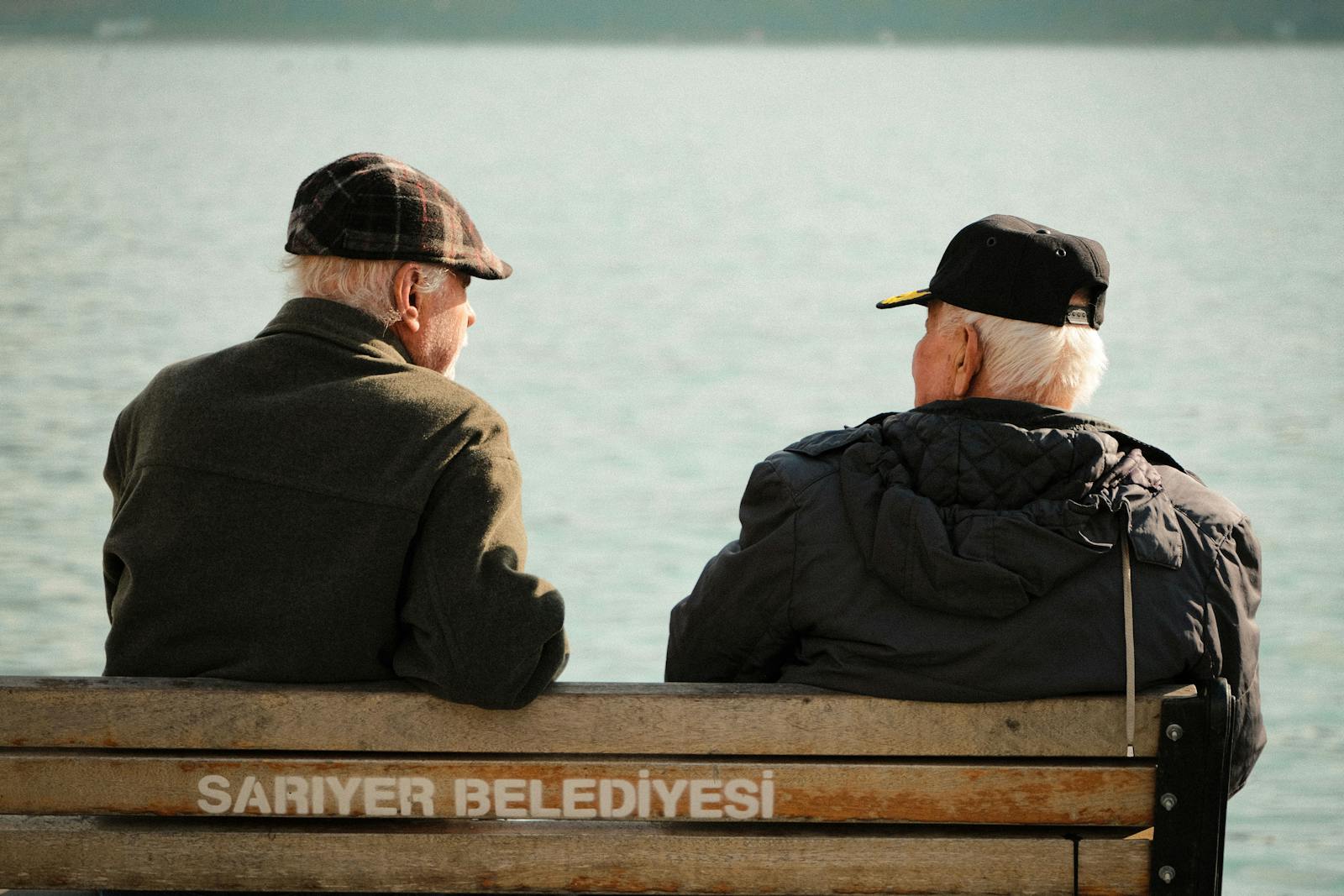
Feature image by Tolgraw on Pexels