






Hitting your lead targets doesn’t mean your marketing is working.
If you work in B2B, you’ve seen the movie: the dashboard shows thousands of new leads, marketing is taking a victory lap, and yet sales says the pipeline is “trash.” That tension is exactly where the demand generation vs. lead generation conversation begins.
What’s the key difference between demand generation and lead generation?
Demand generation creates awareness and interest in your brand at the top of the funnel, while lead generation captures that interest as contact information. Demand gen builds market demand and trust, while lead gen converts that demand into identifiable prospects your sales team can pursue.
But in practice, the distinction isn’t always so clear.
Having spent years in B2B marketing and tracking how teams actually use martech through G2 Data, from account-based marketing platforms to lead generation tools, I see this confusion play out constantly. And that confusion can lead to common problems: chasing vanity lead numbers, misaligned sales expectations, and campaigns that generate contacts but not revenue.
But the reality is pretty simple: the most effective teams don’t choose between demand gen and lead gen. They understand how each fits into the broader revenue engine and use them together to drive the pipeline.
In this guide, I’ll walk through what each strategy actually does, how they fit into the buyer journey, and show you how to use both to generate a pipeline that the sales team actually wants to call.
If you want to get a quick answer, here’s a side-by-side comparison of how the two strategies differ across key criteria.
| Criteria | Demand Generation | Lead Generation |
| Primary goal | Create awareness and trust before buyers are in-market | Capture and convert existing buyer interest |
| Funnel stage | Pre-funnel and top-of-funnel (TOFU) | Mid- and bottom-of-funnel (MOFU/BOFU) |
| Buyer intent | Low or undefined intent | High intent (actively evaluating solutions) |
| Time to impact | Long-term, compounding | Short-term, campaign-driven |
| Cost approach | Upfront investment with decreasing CAC over time | Ongoing spend tied to cost per lead (CPL) |
| Tools | SEO software, content management systems, social media management tools, and analytics platforms | Lead generation software, CRM systems, marketing automation platforms, and lead capture tools |
| When to choose | When entering a new market, building brand awareness, or when leads are low-quality | When traffic exists but conversions are low, or sales needs immediate pipeline |
What is demand generation? Goals, channels, examples
Demand generation is the process of building awareness and interest in your solution before a buyer is ready to talk to sales. In B2B marketing, it includes every touchpoint — content, events, social, and community — that shapes how potential buyers perceive your brand long before they’re in-market.
In my experience, it’s the art of making your solution feel inevitable. Instead of chasing email addresses, the goal is to build reputation and trust through useful content, insights, and consistent visibility.
Think about the brands you hear repeatedly in podcast ads or YouTube videos. You might ignore the ad the first few times, but the name sticks. Later, when you actually need something in that category, it’s the first brand you search for. That familiarity didn’t happen by accident. It’s demand generation at work.
When it works well, buyers don’t just discover your product when they start researching; they already know your brand. In fact, according to G2’s B2B buyer behavior report, two-thirds of buyers now prefer to engage with sales teams only after doing their own research.
Demand generation, in simple terms: It helps buyers know, trust, and remember your brand before they’re ready to fill out a form or talk to sales.
G2’s own Learn hub is an example of this. Rather than pushing product pages or review listings, G2 publishes expert-led analysis on software products, trends in different SaaS sectors, AI, and the future of software buying — topics its audience of B2B marketers and buyers genuinely wants to read. No form, no gate. Just useful content that keeps G2 visible and credible long before a buyer is ready to evaluate software.

What are the key goals of demand generation?
The key goals of demand generation are to create problem awareness, build brand authority, expand your addressable audience, generate high-intent interest, and support the full customer lifecycle. Depending on your business stage, you’ll weight these differently.
- Creating problem awareness: Before buyers evaluate a solution, they need to recognize the problem. Demand generation helps highlight the pain points buyers may not have prioritized yet.
- Building brand authority: Educational content positions your brand as a trusted voice in the category long before a purchase decision happens.
- Expanding your addressable audience: Only a small percentage of buyers are actively in-market at any time. Demand generation reaches the larger group who may buy later, building familiarity that lowers future acquisition costs.
- Generating high-intent interest: The ultimate goal is to move people from passive learning to active evaluation. When demand generation works well, prospects arrive already educated and more likely to convert.
- Supporting the full customer lifecycle: Demand generation isn’t only about acquisition. Educational content and community engagement can also reinforce trust with existing customers and reduce churn.
Once you know what demand generation is trying to achieve, the next question is where it actually happens.
Six important demand generation channels you should know
At G2, we’ve spent a lot of time looking at where B2B buyers actually hang out. So, here are the channels that actually move the needle for B2B demand generation:
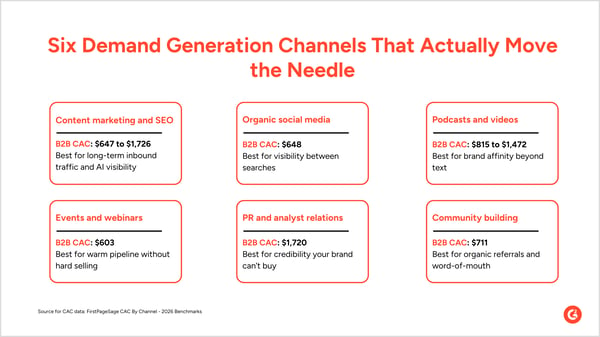
Let’s look at them in detail.
1. Content marketing and SEO
Long-form blog content, guides, and ungated resources that rank on search and educate buyers at the problem-awareness stage. This is the backbone of most B2B demand gen programs. It compounds over time and drives consistent inbound traffic without ongoing spend.
With AI chatbots and LLM visibility in play right now, this channel is getting more important. 29% of buyers now start their research on AI chatbots rather than Google and 17% explicitly state that these generative AI chatbots influence their shortlist. Having strong content marketing and brand awareness has become even more critical as they are the foundation for LLM visibility.
2. Organic social media
LinkedIn is the primary demand gen channel for most B2B teams. Thought leadership posts, founder-led content, and behind-the-scenes company content build audience familiarity over time. Unlike paid social, organic social builds a relationship with your audience rather than interrupting it.
3. Podcasts and video
Long-form audio and video content reaches buyers in formats and contexts where they’re already consuming content — commute, downtime, passive research. A branded podcast or YouTube channel builds brand affinity in ways that written content can’t. Short-form product videos on X are increasingly driving B2B awareness at scale — when they land, the organic reach makes the production cost worth it.
4. Events and webinars (ungated)
In-person and virtual events put your brand in rooms with buyers before they’re actively in-market. Free, ungated webinars are particularly effective as they deliver value, showcase expertise, and create a natural touchpoint for follow-up without the friction of a hard lead capture gate. I’ve found that “Office Hours” or live Q&A sessions build way more trust than a slide deck.
5. PR, review platforms, and analyst relations
Third-party validation from industry publications, analyst reports, and review platforms (like G2) accelerates trust-building in ways owned channels can’t. When a buyer sees your brand cited in a report they already trust, it does more credibility work than any campaign you could run yourself. In fact, more than a third of B2B buyers cite software review platforms like G2 as one of their top sources for research.
6. Community building
Slack communities, LinkedIn groups, subreddits, and industry forums are increasingly important demand gen channels, especially in B2B SaaS. When your brand facilitates a community rather than just broadcasting to one, you build a level of loyalty and word-of-mouth that’s nearly impossible to manufacture through paid channels.
The goal is to show up where your audience already spends time, sharing useful insights rather than pushing for an immediate conversion.
Demand generation in action: Five examples from real brands
To see how demand generation works in practice, let’s look at a few B2B examples. I’ve spent a lot of time analyzing these specific moves because they prove you don’t need a “download now” form to build a massive pipeline.
1. Interactive tools
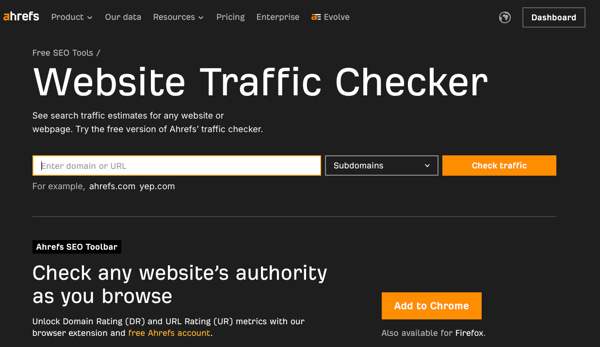
Ahrefs’ free tools, like their website authority checker, backlink checker, and keyword checker, are used by millions of marketers who may never pay for the full product. The tools solve a real problem, require no sign-up, and put the Ahrefs brand in front of exactly the right audience at exactly the right moment. That’s demand generation at its most efficient: the product itself does the awareness work.
2. Founder-led social content
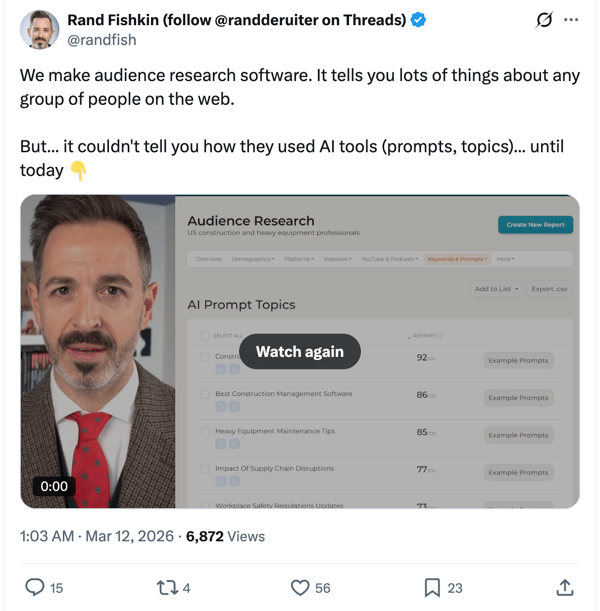
Rand Fishkin built SparkToro’s brand almost entirely through consistent, contrarian takes on marketing and SEO on LinkedIn, Twitter, and his blog. His posts regularly reach buyers who aren’t actively evaluating any tool, but when they are, SparkToro is already the name they remember.
3. Ungated research and reports
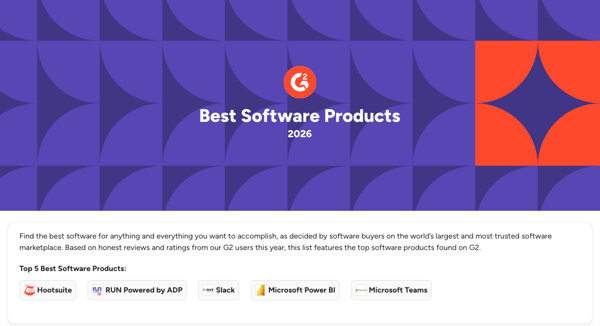
G2’s annual Best Software Awards and buyer behavior reports are published freely and widely referenced across the industry. They surface in journalist roundups, analyst commentary, and buyer research, building G2’s authority as the trusted source for software intelligence without asking for anything in return.
4. Community building
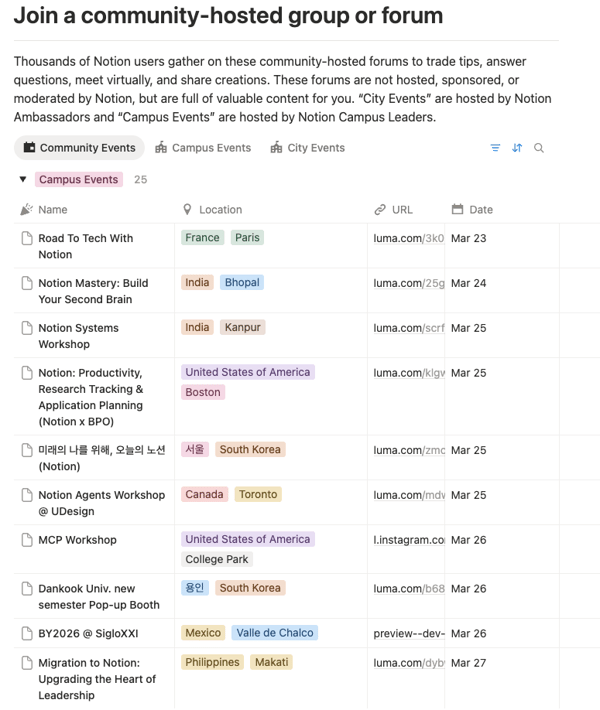
Notion and Figma both built passionate user communities before they became dominant in their categories. The communities weren’t demand gen campaigns, they were ecosystems where brand loyalty formed organically, and word-of-mouth did the pipeline work. Over a period of time, they have become vocal advocates for the products.
5. Marketplace/review platform presence
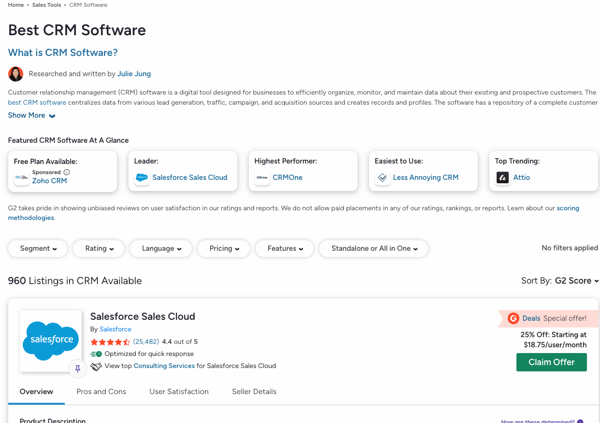
Appearing on G2 category pages and comparison lists functions as demand gen for software buyers mid-research. When a buyer searches “best CRM software” and sees a brand consistently appearing with strong peer reviews on third-party platforms like G2, that’s brand familiarity being built before any direct outreach.
What is lead generation? Goals, tactics, examples
Lead generation is the marketing process of identifying potential customers and collecting their contact information so sales or marketing teams can continue the conversation. This usually happens through forms, sign-ups, or direct engagement when someone shows intent.
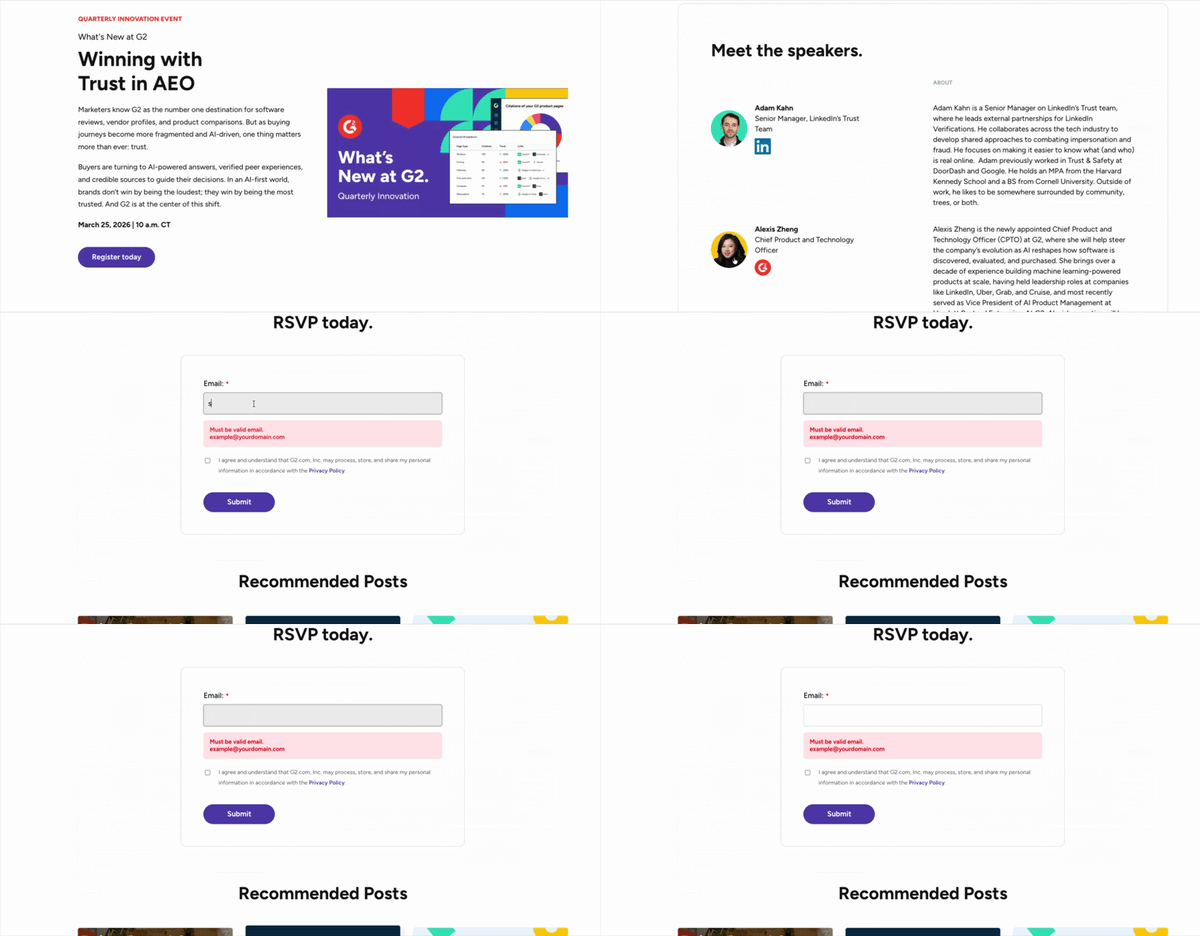
G2’s quarterly innovation event is a good example of this in practice. The “Register today” button is the lead capture moment, but what G2 is offering in return is access to a live session on winning with trust in AEO, a topic its audience of marketers and software buyers genuinely cares about. The registration feels worth it because the content is worth it.
It typically sits in the middle and at the bottom of the funnel. By the time someone engages with a lead-gen asset, they’ve usually moved past the problem-awareness stage. They know they need a solution and are actively evaluating options. Lead generation is how your brand enters that evaluation process.
Instead of optimizing for awareness or engagement, marketers track metrics like form submissions, MQLs, SQLs, and demo requests.
That said, I’ve seen too many teams treat lead gen like a data-harvesting exercise. When it’s done right, it should feel like a fair exchange: the prospect shares their contact information in return for something genuinely valuable, whether that’s a product demo, a specialized report, or access to an exclusive event.
Lead generation, in simple terms: It helps your sales team know who’s already interested so they can reach out at exactly the right moment.
What are the key goals of lead generation?
The key goals of lead generation are to build a qualified pipeline, identify high-intent buyers, and improve the marketing-to-sales handoff with measurable, short-term results. Here’s what that looks like in practice
- Building a pipeline of real prospects: The goal isn’t just collecting contacts. It’s creating a consistent flow of people your sales team can realistically convert into customers.
- Identifying high-intent buyers: Not all leads are equal. Effective lead generation helps surface buyers who are actively evaluating solutions right now through signals like intent data, G2 comparisons, and behavioral tracking.
- Turning demand into revenue opportunities: Demand generation creates awareness, but lead generation converts that interest into real sales conversations.
- Capturing buyer context and intent: A form submission is just the starting point. Strong lead generation captures valuable context such as company size, role, industry, and engagement signals that help sales start smarter conversations.
- Improving the marketing-sales handoff: Lead scoring, qualification criteria, and routing ensure that leads move efficiently from marketing to sales without friction.
- Delivering measurable short-term ROI: Unlike demand generation, which compounds over time, lead generation is expected to produce measurable pipeline in shorter cycles.
What are some lead generation tactics?
This is where you get tactical to achieve your lead gen goals. These are the channels, both inbound and outbound, where you’re looking for a direct action from the user:
1. Gated content
Ebooks, whitepapers, research reports, and templates, offered behind a form, are the most common lead gen tactic in B2B. The trade is explicit: valuable content in exchange for contact information. The key is making sure the content is worth the friction. Note, low-value gated content produces contacts, not prospects.
2. Webinars with registration
Unlike ungated webinars used for demand gen, registration-gated webinars are a lead gen play. The registration form captures contact details; the webinar content qualifies intent. And the attendees who show up live are typically higher intent than those who register and don’t attend.
3. Paid lead generation campaigns
Paid search, paid social, and display advertising can all be configured for lead capture, driving traffic to landing pages with converPaid searchsion-optimized forms by bidding for high-intent keywords like “best Marketing software” or “[competitor] alternatives.” When someone searches for that, they are usually ready to buy. Paid lead gen is fast and scalable, but cost-per-lead can climb quickly without strong targeting and a compelling offer.
4. Free trials and freemium products
Product-led growth has made free trials a dominant lead gen channel in SaaS. When a prospect signs up to use your product, even a limited version, they’re self-qualifying. They’re telling you they have the problem, they’ve evaluated options, and they’re willing to invest time in your solution.
5. Demo and consultation requests
A prospect requesting a demo is one of the highest-intent lead gen signals you can capture. These are buyers actively evaluating solutions, and a well-designed demo request flow can be one of the most efficient conversion points in your entire funnel.
6. Email nurture sequences
Once a lead is captured, email nurture keeps them engaged and moves them toward a sales conversation. Nurture isn’t just a follow-up cadence, it’s a continuation of the demand gen work, delivering relevant content that builds confidence in your solution over time.
Four best lead generation examples from real brands
To make this more concrete, let’s look at how companies turn interest into real leads.
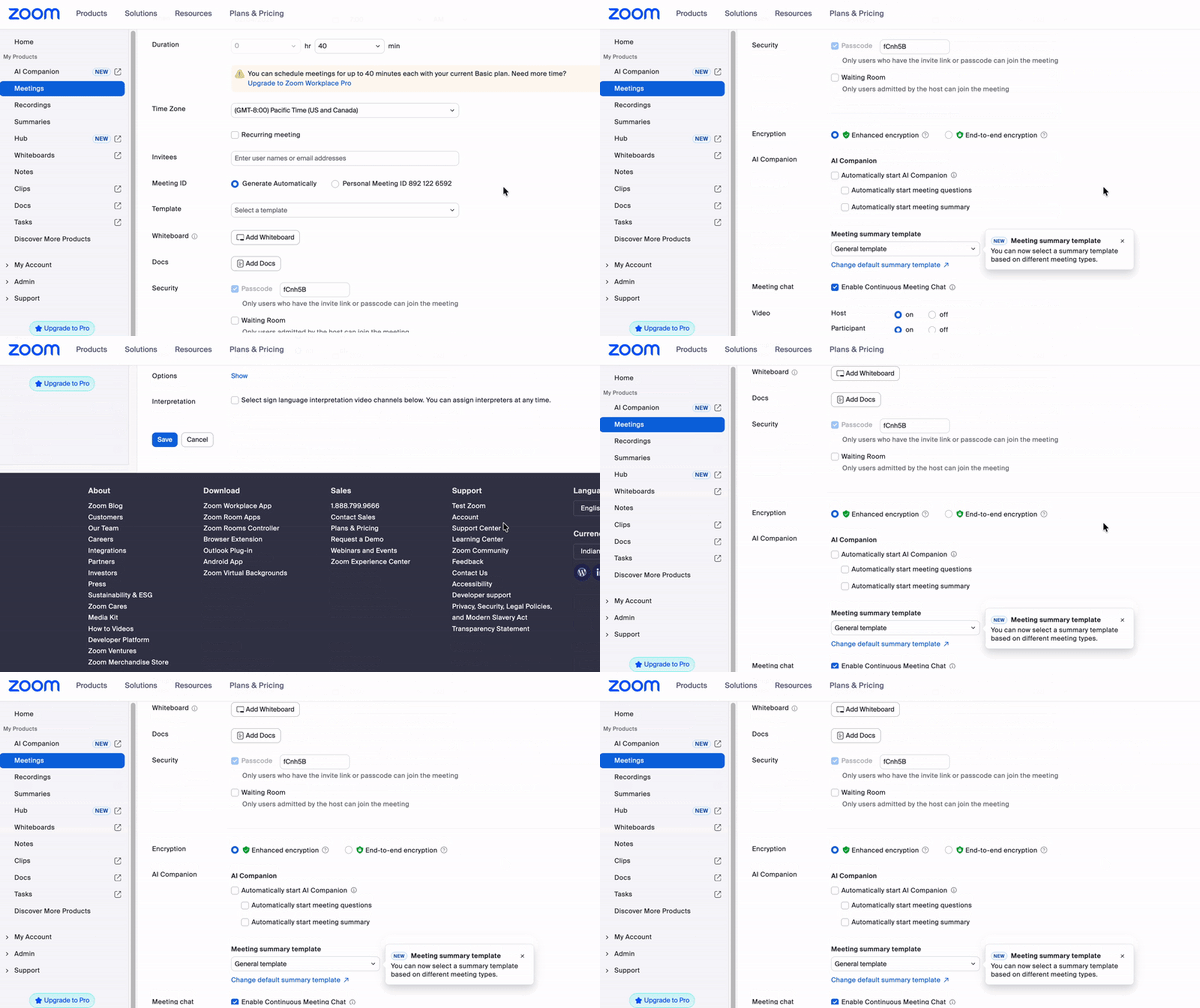
1. Free trial or freemium product
For Product-Led Growth (PLG) companies like Notion, Zoom, or Slack, their free plans let users get started with no credit card required. The sign-up is the lead gen moment. From there, product usage data, feature adoption, and upgrade triggers drive the conversion from free user to paying customer.
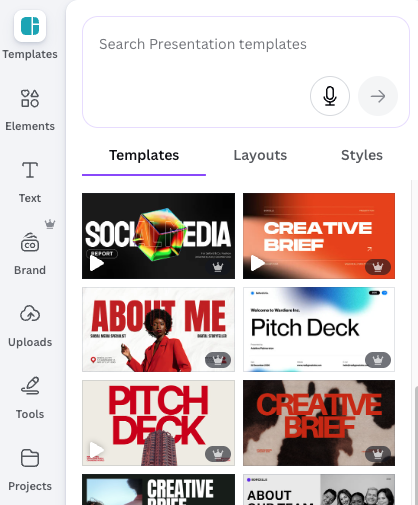
2. Gated tool or template
Canva offers free templates that require account creation to access and save. The signup captures the lead; the product experience does the nurturing. By the time a user hits a paid feature limit, they’re already invested.
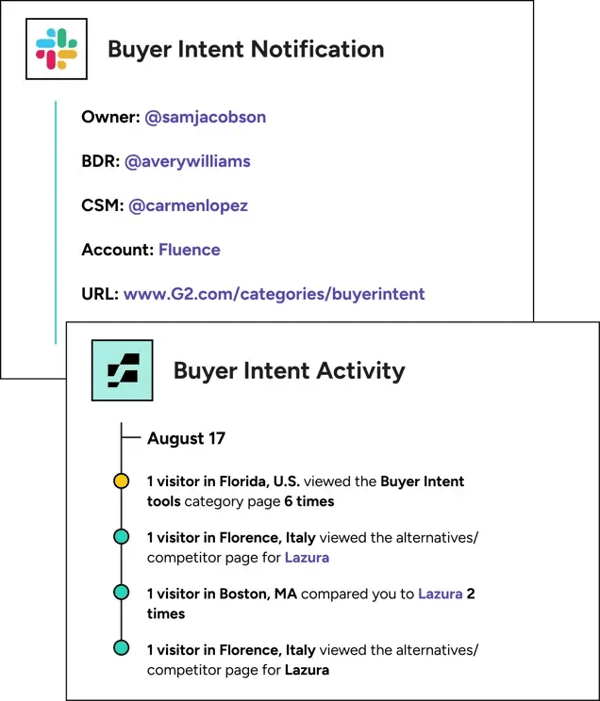
3. G2 buyer intent data
When a prospect visits your G2 profile, compares you against competitors, or reads your reviews, that behavior is a lead gen signal. G2 Buyer Intent captures those signals and surfaces them to your sales and marketing team, turning anonymous research activity into actionable leads before a prospect ever fills out a form.
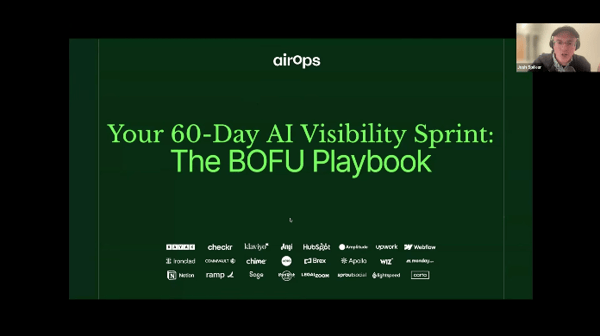
4. Limited-access webinar
A live session with a high-profile expert where registration is required to attend. AirOps does this exceptionally well. They host a series of expert sessions featuring SEO experts that show viewers exactly how to automate complex SEO tasks. The registration is the lead gen moment. AirOps gets a list of people with a verified interest in AI automation, and the prospects get a front-row seat to expert-level training.
But here’s the reality. I often see teams try to “lead gen” their way out of a “demand gen” problem. They try to capture leads from an audience that doesn’t know or trust them yet. It’s like asking someone to marry you before the first date is over. Lead gen is the result of good marketing, not a shortcut for it.
What are the key differences between demand generation vs. lead generation?
Here’s how demand generation and lead generation compare across the criteria that actually matter for marketing teams.
| Factor | Demand generation | Lead generation |
| Purpose | Build awareness and buying intent | Convert existing interest into an identifiable pipeline |
| Audience | Broad audience, including buyers not actively searching | In-market accounts showing purchase intent signals |
| Content type | Ungated content (blogs, videos, podcasts, events) | Gated content (ebooks, demos, trials, webinars) |
| Approach/vibe | Educational and brand-led | Transactional and sales-led |
| Buyer state | Out-of-market buyers learning about a problem | In-market buyers evaluating options |
| Timeline | Long-term, 6-12 months minimum to see the compounding effect | Short-term, campaign-focused; 30-90 day cycles |
| Data you get | Behavioral signals, audience insights, share of voice | Contact records, firmographic data, and intent scores |
| Primary metrics | Brand search, organic traffic, engagement, pipeline influence | MQLs, SQLs, CPL, form submissions |
| Success metrics | Increase in branded search volume, inbound pipeline influence, lower CAC over time | Booked meetings, SQL conversion rate, revenue attributed to lead gen campaigns |
| Budget allocation | Brand building and content investment | Campaign and conversion investment |
| Sales involvement | None or minimal | Direct handoff to SDR or AE |
| Attribution difficulty | Hard to attribute directly without a dedicated attribution platform setup | Easy to attribute |
| Tech stack | CMS, SEO tools, social platforms, analytics | CRM, lead capture, and enrichment tools |
One way I like to think about them: demand generation is about making people want the product. Lead generation is about knowing who wants it.
Why the distinction matters for your budget
The reason I’m so obsessed with people knowing the difference is that it dictates where you spend your next dollar.
Demand gen is your long-term compounding interest. It’s the SEO, the workshops, and the founder-led LinkedIn posts. It lowers your customer acquisition cost (CAC) over time because people already trust you before they ever talk to Sales.
The numbers back this up. According to First Page Sage’s 2026 CAC benchmarks, thought leadership SEO, one of the core demand gen channels, has an average CAC of $647 for B2B companies, compared to $1,907 for inorganic channels like paid ads. That’s nearly a 3x difference in what you spend to win a customer.
Lead gen is your short-term fuel. It’s the “request a demo” button on G2 or the targeted LinkedIn ads. It’s what keeps the SDRs busy.
But here’s where it gets interesting. How much you should lean on paid lead gen versus organic demand gen is one of the most debated questions in B2B marketing and this exchange on X captures this tension perfectly.
.png?width=600&height=596&name=Demand%20gen%20vs%20lead%20gen%20(paid%20ads).png)
Here, Andrew Chen, General Partner at a16z and former head of rider growth at Uber, argues that paid acquisition is a tax on your product’s defensibility — the moment you can’t out-spend incumbents and competitors, you lose. But Sean Gilfillan, a B2B growth advisor, and many others push back, writing that there is no example of a category leader in any category that has maintained leadership without paid ads, because every distribution channel with scale will eventually charge for access.
I’d say both are right. The mistake most B2B teams make is treating this as an either/or decision. Demand gen without lead gen creates fans, not pipeline. Lead gen without demand gen creates contacts, not customers.
How demand generation and lead generation work together
The most successful teams I see build a revenue engine where demand gen warms up the room, and lead gen closes the door. If you try to capture value that hasn’t been created yet, you’re just spamming; if you create value but never capture it, you’re just running a very expensive hobby.
What this looks like in the buyer journey
In practice, I think of this partnership like a relay race. Demand generation runs the first three laps to build speed and trust, then hands the baton to lead generation to cross the finish line once a buyer is ready to engage. Here’s how that progression maps to real buyer behavior:
- Unaware: “Everything is fine.”
A marketer isn’t actively looking for a solution yet, but comes across a LinkedIn post or podcast that introduces a new idea. - Problem aware: “Something’s wrong.”
They start researching and land on a blog post or YouTube video that clearly explains the problem they’re facing. - Solution aware: “There’s a solution.”
Now they’re exploring options — reading case studies to understand what’s possible. - Vendor aware: “Which is the best?”
The buyer is actively evaluating tools, checking G2 reviews, product pages, and Grid® reports to compare vendors. - Decision: “Let’s buy!”
With trust already built, they’re ready to take action, request a demo, or start a free trial.
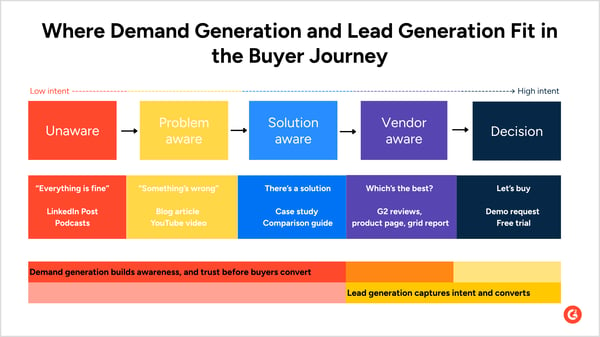
Without demand generation, your lead-gen campaigns will always struggle because you’re paying a trust tax, as Andrew Chen argued earlier. You have to work twice as hard to convert someone who doesn’t know you. But without lead generation, demand generation creates a lot of fans without ever turning them into a pipeline.
The balance shifts depending on your stage
In my experience, you don’t just do both at 100% capacity all the time. Depending on your company’s stage, your market share, or even the time of the month, you’ll need to lean more heavily into one or the other.
Take a B2B SaaS company selling project management software entering a market dominated by established players. In the first six months, almost everything goes into demand gen: ungated blog content, a founder building a LinkedIn audience, a free tool that solves one specific problem for their ICP. The goal isn’t leads yet. It’s recognition. Then, once branded search starts moving and inbound traffic is consistent, they layer in lead gen: a gated benchmark report, a “request a demo” flow, retargeting ads for visitors who didn’t convert. By month nine, the ratio shifts from 80/20 demand gen to 60/40, not because demand gen stopped working, but because it had done enough work to make lead gen worth the spend.
Now take a B2B fintech startup with six months of runway and a sales hire to justify. They can’t wait nine months for the organic to compound. They run paid ads from day one, not because demand gen doesn’t matter, but because they need to know fast which messages convert, which audiences respond, and which offers work. That data is worth more than brand equity at that stage. The key is knowing what you’re buying. Paid lead gen rents the result; the moment you stop spending, the leads stop. The plan is always to use paid early to learn fast, then shift the mix as organic starts compounding.
So how do you know which mode you should be in right now? These are the signals I look for.
When to prioritize demand generation: Five signals to watch for
You’ll want to lean more heavily on demand generation when:
- You’re entering a new or cold market: If people don’t know your product category exists, a “Book a Demo” button is useless. You have to spend time educating them on why their current problem is worth solving first.
- Your brand is invisible: If your brand search volume (people typing your company name into Google) is flat, you’re relying entirely on expensive, cold traffic. You need demand gen to build that “top of mind” familiarity.
- Sales says the leads are “low intent”: If your SDRs are calling people who say, “I just wanted the PDF, who are you?”, your lead gen is out-pacing your demand gen. You need to ungate more content and build trust before asking for the email.
- You have a long, complex sales cycle: For enterprise software that costs $50k+, nobody buys on the first touch. You need a months-long demand gen drip to stay relevant.
- You are in a crowded market: For B2B organizations competing in red ocean categories, like CRM, project management, or cybersecurity, trust and recognition are your only real differentiators. In these spaces, demand gen isn’t just awareness. It’s building preference before the search even begins.
When to prioritize lead generation: Four signals to watch for
On the flip side, lead generation is your accelerant. You prioritize it when the foundation is solid, and you need to see immediate movement in the pipeline.
- Your demand gen is already working: If you’re getting tons of traffic and social love but no one is actually booking meetings, you have a conversion gap. You need to add more hand-raiser opportunities to capture the interest you’ve already built.
- You’re in a highly competitive comparison phase: If buyers are actively looking at you and three competitors on G2, you need high-intent lead gen (like a “comparison guide” or “free trial”) to capture them before they go elsewhere.
- You have a hungry sales team: If your account executives have empty calendars and your SDRs are underutilized, you need to turn the lead gen faucet on immediately to feed the engine.
- You have a clear revenue target for the quarter: Lead gen is the lever you pull for short-term results. If you’re $1M short of your quarterly goal, a brand-building podcast (demand gen) won’t save you, but a targeted ABM campaign (lead gen) might.
How the same channel can support demand gen or lead gen
One thing I always remind teams is that demand generation and lead generation don’t rely on completely different channels. Often, they use the same channels but with different goals.
Demand generation is about giving value first, while lead generation is about asking for contact information once interest exists.
Here’s how that difference shows up in practice.
| Channel | Demand generation mode (giving) | Lead generation mode (asking) |
| Webinars | A recorded webinar posted on YouTube for anyone to watch and learn from | A live session that requires an email to receive the invite link |
| Website | A free, ungated calculator that shows visitors their potential ROI | A “Book a demo” form that sends contact info directly to sales |
| A how-to carousel that solves a real problem in the feed | A Lead Gen Form ad offering a seat at an invite-only roundtable |
The channel doesn’t change. The intent does.
Demand generation and lead generation tools: What’s the typical stack
Most B2B marketing teams don’t have a separate demand gen stack and a separate lead gen stack. They have one stack and the difference is how they use it. The same CRM that tracks demo requests also tracks content engagement. The same email platform that sends nurture sequences also sends newsletters to cold audiences. What changes isn’t the tool. It’s the intent behind how you configure it.
What are some demand generation tools I can look at?
Demand generation tools help marketers reach new audiences, publish content, and build brand awareness over time.
Some commonly used tools include:
- SEO platforms like Ahrefs or Semrush to discover topics buyers are searching for
- Content management systems such as WordPress, Webflow, or HubSpot CMS
- Social media platforms like LinkedIn and X for thought leadership and distribution
- Analytics tools like Google Analytics to track traffic, engagement, and audience growth
- Email and community platforms like ConstantContact, Brevo, Mailchimp, used for newsletters, and audience building
- Brand advocacy platforms that help turn happy customers and employees into brand promoters
- Loyalty management software like LoyaltyLion, and Smile.io, that encourages repeat engagement and long-term customer relationships
These tools help marketers educate potential buyers and keep their brand visible long before a purchase decision happens.
What are some top-rated lead-generation tools I can look into?
Lead generation tools focus on capturing, enriching, and qualifying leads so sales teams can follow up effectively. According to the Lead Generation Software category on G2, this category includes several types of tools used by marketing and sales teams.
Common lead generation software types include:
Examples of widely used lead generation platforms include Apollo.io, ZoomInfo Sales, Lusha, and Instantly, which help teams identify and qualify prospects at scale.
Demand generation drives traffic into the funnel, while lead generation tools capture and route those prospects to sales.
But capturing a lead is only half the battle. The real competitive advantage is knowing who is already in-market before they fill out a form and that’s where intent data comes in.
Intent data and buyer signal tools
Buyer intent data platforms sit at the intersection of demand generation and lead generation, and they’re one of the fastest-growing categories in the B2B martech stack.
These tools identify accounts that are actively researching your category, even before they fill out a form or contact sales. Instead of waiting for a prospect to raise their hand, intent data lets you see who is in-market right now and prioritize outreach accordingly.
G2 Buyer Intent is an example of this in action. When a buyer visits your G2 profile, reads your reviews, or compares you against competitors, that behavior is captured as a buying signal and surfaced to your team. It bridges the gap between anonymous demand gen activity and actionable lead gen follow-up, turning passive research into a pipeline before a prospect ever converts on a form.
Other tools in this space include ZooomInfo Sales, Bombora, 6sense, and Demandbase, which aggregate intent signals across the web to help teams identify and prioritize in-market accounts.
Intent data tells you who to prioritize. But none of these tools matters if you don’t have the infrastructure to act on it, and that’s where marketing automation and CRM become the connective tissue that holds the whole stack together.
Marketing automation and CRM: The connective tissue
No demand gen or lead gen stack works without the platforms that connect them. Marketing automation and CRM tools are where both motions converge, managing content distribution, lead capture, scoring, nurturing, and sales handoff in one place.
Platforms like HubSpot, Salesforce and Marketo sit at the center of most B2B marketing stacks for this reason. They don’t belong exclusively to demand gen or lead gen; they’re the infrastructure that makes both strategies measurable, scalable, and connected to revenue.
Most companies use a connected stack to move prospects from interest to sales follow-up. A typical flow looks like this:
- Lead source: ads, website, events, or social media
- Lead capture tool: forms, chatbots, or landing pages
- Marketing automation platform: lead scoring and nurturing
- CRM: tools like HubSpot, Salesforce, or Dynamics
- Sales pipeline: follow-up and opportunity management
What are the common mistakes teams make with demand generation and lead generation?
By now, you probably have a fair idea of where things can go wrong with both strategies. Still, a few common mistakes show up repeatedly in my experience.
- Treating lead generation as a shortcut for demand generation: Trying to capture leads from an audience that doesn’t know or trust your brand yet rarely works. Without awareness and credibility, lead generation campaigns feel like spam, and conversion rates suffer.
- Gating everything: Putting every asset behind a form limits reach and slows awareness. High-value content should often be ungated to build trust first, while gated assets should focus on high-intent buyers.
- Optimizing for lead volume instead of pipeline: Large lead counts can look good in reports, but don’t always translate into revenue. The real goal of both demand generation and lead generation is qualified pipeline, not just contact volume.
- Misalignment between marketing and sales: When marketing focuses on generating leads while sales cares about pipeline quality, friction appears. The most effective teams align both strategies around shared revenue goals.
FAQs on demand generation vs. lead generation
Have more questions? Find the answers here.
Q1. What does a demand generation funnel look like?
A demand generation funnel maps the buyer’s journey from unaware to ready-to-buy. It typically has five stages:
- Unaware: The buyer doesn’t know they have a problem yet. Demand gen creates the initial trigger through content, social, or PR.
- Problem aware: They recognize the challenge. Blog posts, podcasts, and organic search content meet them here.
- Solution aware: They’re exploring options. Case studies and comparison content build preference.
- Vendor aware: They’re actively evaluating. G2 reviews, category pages, and peer recommendations influence the shortlist.
- Decision: They’re ready to act. This is where demand gen hands off to lead gen through a demo request, free trial, or direct outreach.
Q2. Should I prioritize demand generation or lead generation?
It depends on your business stage and goals. Demand generation should come first when your brand lacks awareness, you’re entering a new market, or your sales team keeps reporting that leads “don’t know who we are.” Lead generation becomes the priority when buyers already recognize your brand, and you need to convert that existing interest into a pipeline. Most mature B2B teams run both simultaneously: demand gen builds the room, lead gen captures who’s in it.
Q3. How much budget should I allocate to demand gen vs. lead gen?
There’s no universal ratio, but a commonly cited B2B benchmark is 60% demand generation and 40% lead generation for established companies, and closer to 40/60 for early-stage companies that need an immediate pipeline. The right split depends on three factors: your brand awareness today, the length of your sales cycle, and how much pipeline pressure you’re under.
- A startup with six months of runway and an empty sales calendar should lean heavily into lead gen immediately.
- A mature brand with strong inbound traffic but low conversion rates needs to tip the balance toward lead gen’s conversion mechanics.
- As your demand gen program matures and branded search grows, you can shift budget toward lower-CAC organic channels.
Q4. What tools are used for lead generation?
Lead generation is the process of identifying and capturing potential customers so your sales team can follow up. Common lead generation tools include CRM platforms, marketing automation software, lead capture tools, and lead intelligence platforms. Tools like HubSpot, Salesforce, Apollo.io, ZoomInfo Sales, and Lusha help businesses identify prospects, capture contact information, and route leads to sales teams. For an up-to-date list ranked by user reviews, see the lead generation software category on G2.
Q5. What is lead capture in marketing?
Lead capture is the process of collecting a potential customer’s contact information, typically through forms, landing pages, chatbots, or demo requests. It’s the moment an anonymous visitor becomes an identifiable lead your team can follow up with. The quality of what you offer in exchange (a gated report, a free trial, a live demo) directly determines the quality of what you get back. According to G2 user reviews, the top-rated lead capture platforms include ZoomInfo Sales, Apollo.io, and Seamless.
Q6. What platform integrates lead capture with CRM systems?
Connecting lead capture to your CRM eliminates manual data entry and ensures new leads reach sales immediately, before intent cools. Most modern lead capture tools like ZoomInfo Sales, Apollo.io, Seamless, Popl and Typeform integrate directly with CRM platforms so new leads route to sales automatically, without manual data entry. Platforms like HubSpot, Salesforce, and Marketo handle both sides — lead-capture forms and landing pages on the front end, and CRM data and pipeline management on the back end. For smaller teams, HubSpot’s free tier covers the basics of both in a single system.
Q7. What is the best platform for capturing leads from multiple channels?
The best multi-channel lead capture platforms centralize form submissions, chatbot conversations, ad leads, and event registrations into a single pipeline. Apollo.io and ZoomInfo Sales both handle this natively across web, outbound, and intent-based channels. For teams running high-volume paid campaigns, Unbounce and Instapage specialize in conversion-optimized landing pages that feed directly into your CRM. If your lead sources include third-party review platforms, G2 Buyer Intent captures anonymous research activity — leads who are evaluating your category before they’ve filled out any form — and surfaces them as actionable signals.
Q8. Which tool supports lead capture via chatbots?
Chatbot-based lead capture works well for high-traffic pages where visitors have specific questions before they’re ready to fill out a form. Drift and Intercom are the most widely used B2B options — both qualify visitors through conversational flows and route high-intent leads directly to sales. HubSpot’s native chatbot builder integrates lead capture with its CRM out of the box, which reduces setup friction for teams already in that ecosystem. For an up-to-date comparison of chatbot tools by user rating, see the conversational marketing software category on G2.
Q9. Are lead generation companies worth it?
They can be, if the timing is right. Lead generation companies like KlientBoost, SmartBug Media, Callbox, Martal Group, and Belkins help businesses run outreach campaigns, book meetings, and generate qualified leads at scale without building a full in-house outbound team. The catch: they work best when your brand already has some awareness. If buyers don’t recognize your name, even the best outreach sequences will convert poorly. Think of external lead gen services as fuel, not a foundation.
Q10. What is the top-rated lead generation service for SaaS businesses?
SaaS businesses often have both a free/trial product and a direct sales motion, which means lead generation needs to support both paths at once. SaaS lead generation services work best when they understand these product-led and sales-led motions simultaneously. According to G2’s lead generation services category, highly rated providers for SaaS include Belkins, Martal Group, and Callbox — all of which specialize in outbound campaigns for software companies. The key differentiator to look for is whether the provider can target by tech stack, company growth stage, and buying signals, not just firmographic data. For SaaS specifically, intent-based targeting matters more than list size.
Q11. What is lead scoring and why does it matter?
Lead scoring assigns a numerical value to prospects based on their engagement, company profile, and buying intent — so sales teams can prioritize the leads most likely to convert instead of working the list in random order. A lead who visited your pricing page three times and downloaded a comparison guide scores higher than someone who opened one email six months ago. Without lead scoring, high-intent buyers often sit in a queue behind cold contacts, and conversion rates suffer.
Q12. What lead scoring tools integrate with marketing automation platforms?
When lead scoring is built into your marketing automation platform, scores update automatically as prospects engage, no manual re-scoring needed. Most lead scoring tools are built directly into marketing automation platforms. Agentforce Sales (formerly Salesforce Sales Cloud), ZoomInfo Sales, Apollo.io, ActiveCampaign, Zoho CRM, all score leads automatically based on email engagement, campaign interactions, page visits, and CRM data, and surface high-intent prospects to sales without manual review.
For an up-to-date comparison, see the lead scoring software category on G2.
Q13. What is the most cost-effective lead scoring platform?
Lead scoring ranks prospects by their likelihood to convert, so your sales team focuses on the right leads first. Cost-effectiveness depends on whether you need a standalone tool or are happy with scoring built into a platform you already use.
Apollo.io is the most affordable all-in-one option. It combines lead data, scoring, and outreach in a single tool starting at $49/month. For teams already in HubSpot, built-in scoring is included in paid Marketing Hub tiers with no extra cost. Zoho CRM and Freshsales both offer solid native scoring at a lower per-user cost than enterprise platforms like Marketo or 6sense.
Q14. Which lead scoring software is best for account-based marketing?
For ABM programs, lead scoring needs to work at the account level — not just the individual contact level. 6sense Revenue AI for Marketing and Demandbase support account-level scoring by aggregating signals across multiple contacts within the same company and surfacing which accounts are most likely in-market. G2 Buyer Intent data also feeds directly into ABM workflows: when multiple contacts from the same account are researching your category on G2, that’s an account-level signal your scoring model should be capturing.
Q15. How can marketers use G2 for demand generation?
G2 supports demand generation in two ways: through organic visibility and through third-party credibility.
When a software brand appears consistently on G2 category pages, Grid® reports, and comparison lists, buyers encounter that brand during their research before they’ve ever visited the company’s own website. That’s passive demand generation at scale. G2’s freely available research, such as the annual Best Software Awards and buyer behavior reports, is cited across industry publications and analyst commentary, extending brand reach without any direct spend. For buyers already in-market, a strong G2 presence accelerates trust in ways owned channels can’t replicate.
Demand gen or lead gen? Yes.
If there’s one takeaway from this entire discussion, it’s this: the demand gen vs. lead gen debate is a distraction.
The most effective B2B marketers act as revenue architects. They build an ecosystem where value is given freely to build a moat of trust, and conversion points are placed strategically to capture that trust when the buyer is ready.
Stop taking victory laps for lead targets that don’t turn into deals. Instead, start building an engine where every piece of content and every form fill is a deliberate step toward the only metric that truly matters: Sustainable revenue growth.
If you’re serious about balancing demand and lead gen, you need to see the full picture. Explore the top-rated attribution software on G2 to discover which tools can help you connect your marketing efforts directly to your bottom line.