






Add Silicon Canals to your Google News feed. 
A woman named Margaret, seventy-three, told a researcher something that stayed with me for weeks after I read it. She said she didn’t feel lonely when her husband died. She had friends then, people who showed up, casseroles on the counter, phone calls at odd hours. She felt lonely two years later, when she realized that every single one of those friendships had run on her fuel. She’d always been the one to organize the dinners, send the birthday cards, suggest the walks. When grief made her too tired to keep performing that role, the phone stopped ringing. “I thought I had twelve close friends,” she said. “Turns out I had twelve people who enjoyed being invited to things.”
That distinction, between mutual friendship and maintained friendship, is something most people don’t confront until their sixties or seventies. And when they do, the psychological damage runs deeper than almost any other form of social loss.
Why this form of loneliness is structurally different
Losing a spouse is devastating. Relocating to a new city in your late years is disorienting. But both of those losses come with a clear narrative: something was taken, something changed. The grief has a shape. Other people recognize it. There are support groups, sympathy cards, community resources designed around exactly these transitions.
The loneliness of discovering your friendships were one-directional has none of that scaffolding. There’s no event to point to. No date it happened. No eulogy. Just a slow, creeping awareness that the relationships you thought defined your social world were actually a kind of unpaid labor you’d been doing for decades, and when you finally put down the weight, nobody picked it up.
Studies suggest that changes in social connections represent one of the primary drivers of isolation in later life. But research tends to focus on structural causes: retirement, mobility loss, bereavement. What gets less attention is the qualitative reckoning, the moment when someone realizes the quantity of their relationships was never the problem. The reciprocity was.
This is something we’ve explored on this site before in the context of friendships that disappear in midlife. The pattern starts much earlier than retirement. But the consequences compound.
The initiator trap
Studies suggest there’s a personality profile that shows up in loneliness patterns, though it rarely gets named directly. I think of it as the social architect: the person in any group who sends the first text, picks the restaurant, remembers the anniversary, organizes the reunion. These people often grew up in households where they learned early that connection was something you earned through effort. I’ve written before about how being called mature as a child often meant learning to manage other people’s needs before your own. That same wiring, transplanted into adult friendships, creates someone who is exceptionally good at maintaining social bonds and almost incapable of testing whether those bonds exist independently of their effort.
For decades, this works. The social architect has a full calendar, a wide network, a reputation for being “the glue” that holds groups together. Everyone agrees they’re beloved.
Then something disrupts the pattern. A health scare. A bout of depression. Retirement removing the built-in social structure of work. Simple exhaustion. And the architect stops building. Not as a test, not as a strategy, but because they genuinely can’t sustain it anymore.
What happens next is the part that breaks people.
The silence that rewrites your autobiography
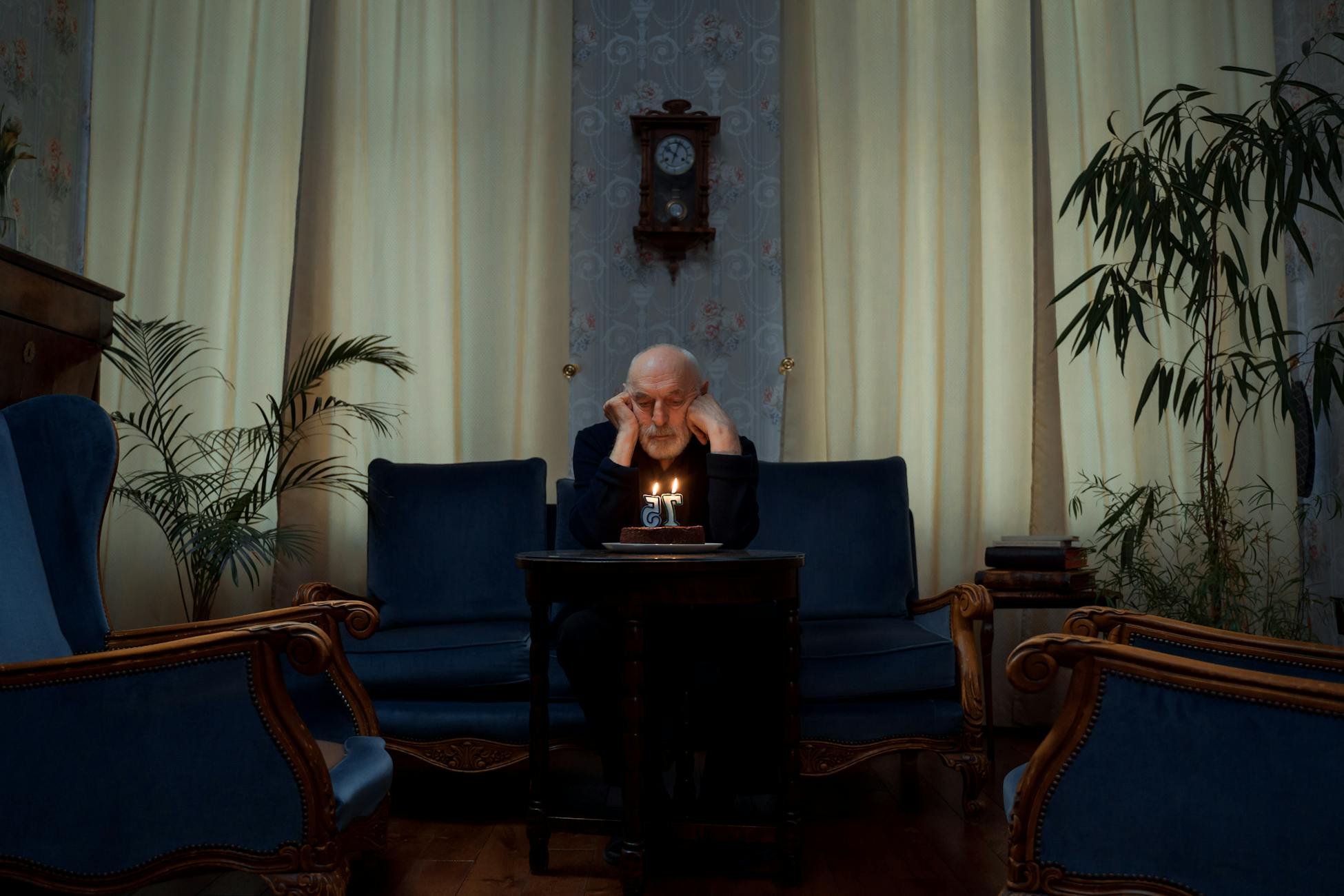
Nothing happens. That’s the answer. The phone doesn’t ring. The invitations don’t come. Weeks pass. Then months. And the person sitting in that silence isn’t just lonely. They’re undergoing something more corrosive: a retrospective reappraisal of their entire social history.
Every dinner party, every holiday gathering, every “you’re such a wonderful friend” compliment gets reinterpreted through this new lens. Were any of those people actually choosing me, or were they choosing the experience I created? Did anyone ever reach out first? When was the last time someone asked how I was doing without me having brought it up?
This reappraisal is psychologically brutal because it doesn’t just affect the present. It contaminates the past. A person grieving a spouse still has forty years of genuine shared memories. A person who discovers their friendships were one-directional starts questioning whether any of those shared memories meant what they thought they meant.
Reports on the loneliness crisis among older Americans have increasingly highlighted how isolation in later life functions as a public health emergency. But within that broad crisis, this specific flavor of loneliness, the retrospective kind, carries a particular toxicity because it attacks something more fundamental than social contact. It attacks a person’s trust in their own judgment about relationships.
Why recovery from this is so difficult
When you lose a spouse, people tell you to join a grief group, reconnect with old friends, build new routines. The advice is practical and the path forward, while painful, is at least visible.
When you discover that your friendships were maintained entirely by your own effort, the advice landscape is barren. Join a club? You already know how to meet people. The problem was never access. It was reciprocity. Make new friends? With what template? The only model you have is one where you do all the work. How do you build a mutual friendship when your entire relational muscle memory is built around one-way maintenance?
Research has found a bidirectional relationship between loneliness and depression, where each condition feeds the other in a loop that becomes harder to interrupt over time. For people caught in the initiator trap, this loop has an extra gear: the belief that reaching out again just replicates the pattern. So they don’t. And the isolation deepens.
I’ve noticed in my own life, at thirty-seven, early versions of this pattern. The birthday dinner three years ago where I looked around the table and realized I’d organized it, chosen the restaurant, sent the reminders, and nobody had asked me a single question about my year. I was the host of my own life and somehow also the least-known person in the room.
The gender dimension nobody talks about
This pattern hits men and women differently, though both are vulnerable. Women who served as social architects often maintained the friendship infrastructure for entire families: the Christmas cards, the couples’ dinners, the children’s playdates that doubled as adult socialization. When they stop, the social world of everyone around them contracts, and yet nobody attributes the collapse to the absence of her labor. They just say people “drifted apart.”
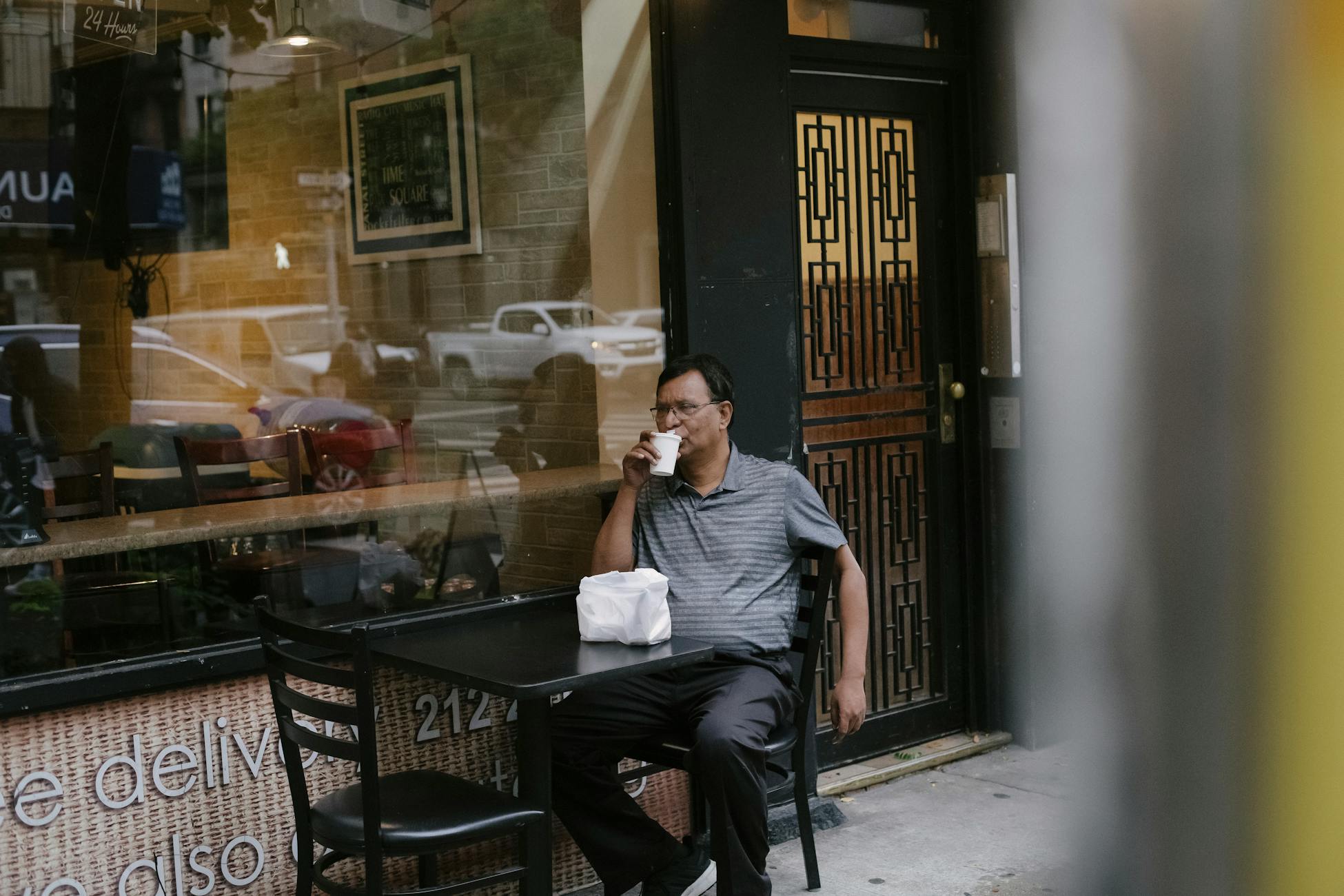
Men face a different version. Many men in their sixties and seventies arrive at retirement having outsourced their entire social lives to their wives, to work colleagues, or to activity-based contexts (the golf foursome, the pub regulars) that evaporate the moment the activity stops. Writers on this site have covered the crisis of men whose only friend was their spouse, and that dynamic connects directly to this broader pattern. When you’ve never practiced the skill of initiating and maintaining genuine friendship, the discovery that your social bonds were context-dependent rather than person-dependent hits with a particular force.
What a repair actually looks like
I’m wary of offering solutions here, partly because I don’t think there’s a clean one, and partly because the impulse to solve this quickly is itself part of the problem. People who spent their lives being useful to others will, when confronted with their own loneliness, immediately try to become useful again. They’ll volunteer. They’ll organize. They’ll become the architect of a new social structure, and the cycle will repeat.
I came across a video recently from Justin Brown that tackles this from another angle—arguing that our cultural obsession with being “special” actually creates the isolation that leads us to overcompensate in friendships, which might explain why we end up being the only ones putting in effort.
The harder, slower work involves something that Buddhism calls “right effort,” which I encountered years ago during a period of my own social reckoning. Right effort means applying energy wisely rather than compulsively. In the context of friendship, this means learning to tolerate the discomfort of not being the one who reaches out first. Letting a silence stretch long enough to see who fills it. Accepting that a smaller circle of genuinely mutual relationships is worth more than a large network built on your own exhausting maintenance.
Research into what keeps people psychologically resilient in old age keeps pointing toward quality over quantity. I explored this in a recent piece on people who reach ninety without bitterness, and the recurring theme was the same: a specific, practiced relationship with disappointment. The ability to be let down by people without concluding that all people will let you down.
That’s the real recovery task here. Not rebuilding a social calendar. Rebuilding the belief that reciprocity is possible, after a lifetime of evidence that you had to manufacture it yourself.
The question underneath the question
When someone in their seventies says “I’m lonely,” the instinct is to look at their circumstances. Do they have transportation? Are there community programs nearby? Can we get them a tablet so they can video-call their grandchildren?
But sometimes the loneliness has nothing to do with access and everything to do with a question they’ve been avoiding for decades: If I stop performing the role of connector, do I still exist in anyone’s mind?
That question is terrifying at any age. At seventy-three, when the energy to keep performing has finally run out and the answer appears to be no, the terror becomes something quieter and more permanent. It becomes the background temperature of every remaining day.
I don’t have a neat ending for this. My daughter is sleeping in the next room and I’m sitting here thinking about what kind of friendships I’m modeling for her, whether she’s watching me organize and initiate and accommodate, and learning that this is what connection looks like. I hope she learns something different. I hope she learns to sit still long enough to notice who shows up without being asked.
From the editors
Undercurrent — our weekly newsletter. The sharpest writing from Silicon Canals, curated reads from across the web, and an editorial connecting what others cover in isolation. Every Sunday.
Free. No spam. Unsubscribe anytime.