



As a marketer and consumer, few can explain the impact of AI personalization quite like yours truly.
![Download Now: The Annual State of Artificial Intelligence in 2025 [Free Report]](https://no-cache.hubspot.com/cta/default/53/b72f2b25-8cc9-4642-9a1b-1e675d3d273b.png)
I’ve created (and received) hundreds of personalized marketing assets in my day, and it’s crystal clear when something was created in a half-hearted effort, versus when it’s tailored to one’s specific interests and behaviors. The latter makes both of my alter egos smile, and a lot of it is thanks to artificial intelligence.
If you’re interested in using AI personalization marketing to reach your customers, I put together this guide to help.
Table of Contents
Executive Summary
AI personalization uses artificial intelligence to deliver tailored experiences, content, or offers to each customer based on their behavior, preferences, and real-time data. Unlike traditional personalization, AI adapts automatically and at scale. Key benefits include higher engagement, increased revenue, and improved customer satisfaction.
Common real-world examples can be seen in Amazon‘s product recommendations and Netflix’s viewing suggestions. To get started with AI personalization, select the right tools for your goals and experience, establish a robust data foundation, and adhere to best practices for privacy and transparency.
Ready to personalize at scale? Explore content personalization through HubSpot with a free demo.
What is AI personalization?
AI personalization tailors experiences to each customer using artificial intelligence (which is why it is a crucial part of the tailor stage in Loop Marketing).
Unlike traditional personalization, which relies on manual rules and static segments, AI personalization adapts in real time based on user behavior and data. It continuously learns from interactions like email clicks and website visits to deliver increasingly relevant content, recommendations, and experiences.
But how does it do this? AI can understandably get quite technical, so I’ll try to explain it as simply as possible.
At its core, AI personalization works using three key capabilities:
- Behavior Tracking — AI monitors how customers interact across all touchpoints, from browsing patterns to purchase history, building a comprehensive understanding of individual preferences. It also compares these to the typical journeys of buyers to understand what behaviors typically lead to a sale.
- Real-Time Adaptation — As customers engage with your brand, AI instantly adjusts the experience based on their current behavior and context, ensuring every interaction feels relevant and intuitive.
- Predictive Recommendations — By analyzing patterns across millions of data points, AI anticipates what customers want next and presents it to them. This can include the following natural content in the buyer’s journey or even a related product after a purchase.
This dynamic approach means AI doesn‘t just personalize based on who your customers are — it personalizes based on what they’re doing right now and what they’re likely to do next.
Why use AI for marketing personalization?
Modern marketers are no strangers to using AI through marketing automation tools to trigger workflows to send emails, nurture leads, and complete internal tasks. Automation tools are excellent for streamlining recurring things like this.
The difference with using AI for marketing personalization is that it’s dynamic. It can gather and interpret data, identify trends and opportunities, and, in turn, adapt the copy delivered in the email, the offer behind the call-to-action, or the content on the website page. This means that rather than being a tool to help streamline actions, AI can actually help you personalize the actions on a deeper level.
Not only does personalization help increase sales, but 94% of marketers also say that a personalized experience impacts their company’s sales.
Benefits of AI Personalization Marketing
If you’re like most marketers I know, you already have reliable marketing automations set up, but if you want to kick it up a notch, add AI personalization into the mix. According to marketers I spoke with, and industry research, here are the key benefits driving 92% of organizations to adopt AI for personalization:
Enhanced Customer Experience and Engagement
Segment found that four in five (81%) organizations believe recent AI technology has the potential to positively impact customer experiences. Why exactly?
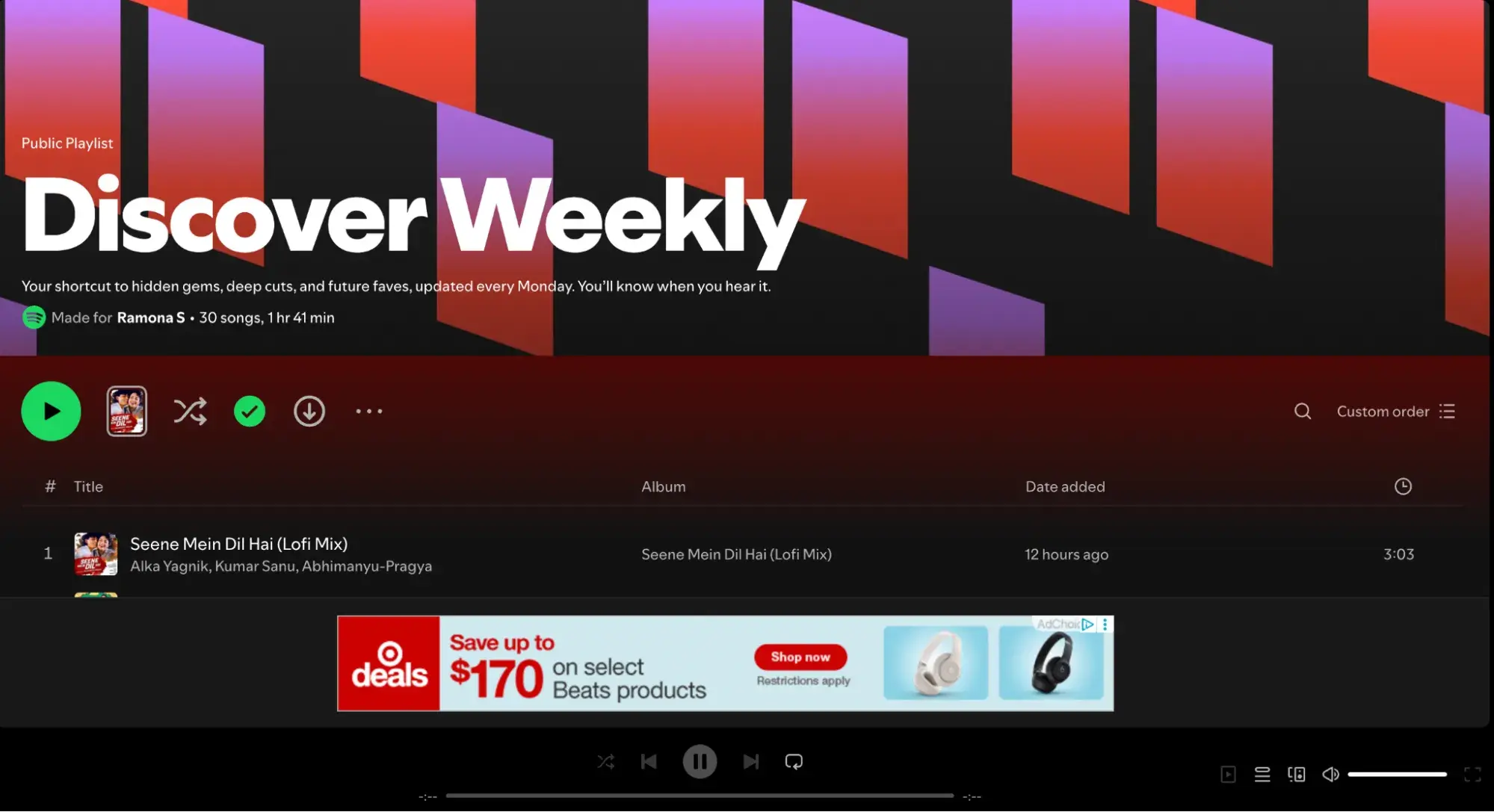
Just consider your own daily experiences of Spotify refreshing your Discover Weekly playlist or your favorite store emailing with a free gift on your birthday. They’re using data to create experiences that feel just for you. AI makes every interaction feel uniquely crafted for you — and admit it, you love it. I know I do.
This level of personalization drives real results. Don’t believe me? According to Medillia, 82% of customers say personalization drives brand choice.
Easier to Scale
As James Brooks, marketer and founder of Journorobo, puts it: “AI gives us the opportunity to scale the unscalable.”
I mean, think about it. Before the internet, personalization in sales and marketing primarily meant giving each prospect or customer one-on-one attention. You needed to spend quality time with them, make them feel special, and genuinely understood. (Ala Don Draper in Mad Men.) Unfortunately, no one really has that time anymore — especially with high revenue goals. AI can save the day.
Brooks adds, “The key is using this creatively, thoughtfully, and putting the effort in upfront. If you put the effort in on the front end and create a great, thorough prompt, it will serve you for months or years to come, every day, on autopilot.”
Read: How to Use AI Personalization Tactics to Scale Marketing Growth
Improved Marketing Efficiency
AI doesn’t just improve outcomes — it fundamentally changes how efficiently you can achieve them. By automating the analysis of customer behavior and the delivery of personalized experiences, AI frees your team to focus on creative strategy rather than execution.
For example, instead of manually creating dozens of email variations for different segments, AI can automatically generate and test thousands of personalized messages, learning what works best for each individual customer.
Measurable Revenue Impact
Perhaps the most compelling benefit is the direct impact on the bottom line. Personalization isn‘t just about making customers smile — it’s about driving measurable return on investment. And this is more than anecdotal.
Medallia found that brands that rate their personalization capabilities the highest are nearly 2x as likely to achieve major revenue growth. More specifically, according to McKinsey, personalization can lower customer acquisition costs by as much as 50%, lift revenue 5% to 15%, increase marketing ROI 10% to 30%, and improve customer outcomes.
Ninety-six percent of marketers also say that a personalized experience increases the chances of people becoming repeat customers.
Challenges of AI Personalization
While AI personalization offers tremendous benefits, implementing it successfully usually means addressing several key challenges. Here’s what marketers need to consider and how to overcome.
What are the main challenges of AI personalization?
Data Privacy and Customer Trust
With data hacks and breaches aplenty, privacy concerns top the list of AI personalization challenges. Consumers want personalized experiences, of course, but they also demand security and clarity about how their data is used.
The Solution: Build trust through transparency. Be upfront about what data you collect and how it benefits customers. Implement robust data governance policies and give customers control over their personalization preferences. As Google demonstrates with Gemini, allowing users to view, edit, or delete their data builds confidence in AI-powered experiences.
Crafting Effective AI Prompts
I think we’re all in agreement that prompting is hard. AI is smart, but it’s still learning, and human nuances aren’t its strong suit.
Most AI personalization tools need time and practice to adjust to your voice, tone, and requests. So, provide detailed instructions.
The Solution: Brooks suggests being as specific as possible: “Look at a language learning model (LLM) as a person — a VERY intelligent and knowledgeable person, but still a person. It cannot read your mind. Set very specific prompts. Tell the LLM exactly what you want: how you want them to write, what you want the outcome to be, how you want things formatted, what you do want, and what you don’t want.”
Pro Tip: Invest time upfront in creating detailed prompt templates. Document what works and build a library of proven prompts your team can reuse and refine. Not sure where to start? Check out our free resource, “1,000+ AI Marketing & Productivity Prompts.”
Technical Complexity
Marketing personalization at scale can’t be done just by typing a few prompts into an AI agent. Unless you’re using a marketing tool like HubSpot that has native AI personalization features, you’ll likely need to understand APIs and how AI integrates with your existing marketing stack.
The Solution: “Fortunately, with the rise in ‘no-code’ tools, it’s never been easier to tap into APIs and automate your marketing,” says Brooks. “I recommend checking out tools like Make.com and Zapier that natively connect with your favorite marketing tools and AI platforms like OpenAI. A little YouTube-ing can also go a long way to learning this stuff.”
HubSpot also has connectors for both Claude and ChatGPT.
Maintaining Human Connection
AI personalization is a bit of an oxymoron. The truth is, the more artificial intelligence handles personalization, the greater the risk of losing the human touch that fosters genuine relationships with customers.
The Solution: Use AI to enhance, not replace, communication and creativity. Let AI handle data analysis and pattern recognition while your team focuses on strategy, creative direction, and building authentic brand connections. The most successful implementations blend AI efficiency with human empathy and creativity.
Read: How to Humanize AI Content to Rank, Engage, and Get Shared in 2026
Measuring ROI and Attribution
The nice thing about all of the AI integrations and connectors is that they make personalization possible across multiple touchpoints. The bad thing is that it makes attributing success to specific initiatives much more difficult.
The Solution: Establish clear KPIs before implementing AI personalization, including short-term metrics (conversion rates, engagement) and long-term indicators (customer lifetime value, retention rates). Use control groups to measure the incremental impact by testing against variations without personalization.
Top 7 Use Cases for AI Personalization Marketing
1. Ecommerce & Retail Recommendations
AI-driven personalization has become a must-have in ecommerce for both brands and consumers. From a brand perspective, it increases relevance, capitalizes on “impulse buys,” and overall, boosts sales. Meanwhile, consumers enjoy a more curated and, ideally, smooth experience.
When shopping online, recommendation engines analyze user behavior (browsing history, clicks, and past purchases) and surface the most relevant products — often in real-time. In fact, Medallia found that purchase history is the most commonly used information to segment and curate experiences.
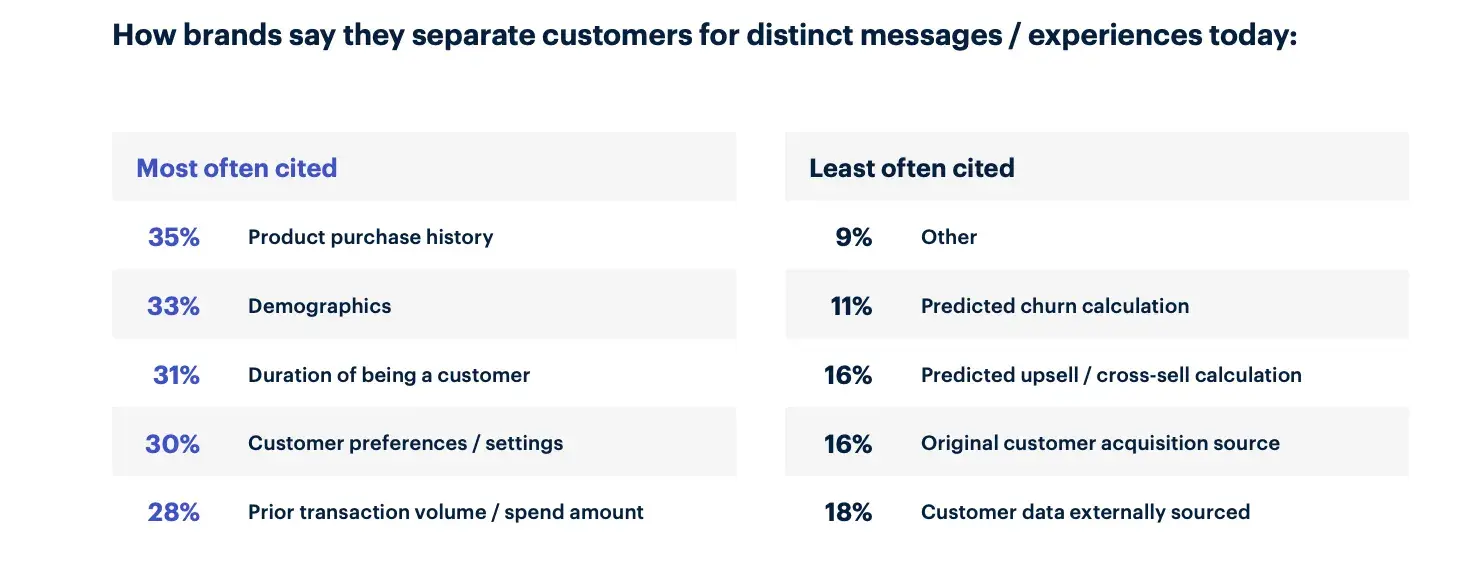
But why does this matter? AI personalization can cut through choice overload. Modern customers often abandon carts when overwhelmed. Tailored suggestions make decisions easier and drive up average order values and conversion rates.
2. Email Marketing
Sending personalized emails is nothing new. We’ve all been on the receiving end of a marketing email that’s addressed to us, or one reminding us of the item we just viewed while online shopping. However, AI tools can help marketers go the entire mile.
You can use AI to gather customer details such as their birthday, hobbies, professional expertise, and even passions, then add that information to your emails.
Pro Tip: “You can do this in an automated way using various no-code tools,” shares Brooks. “Personally, I use Bento for my emails. It can make an API call for each email it sends out, meaning that you can send unique emails, per person, even if you are effectively sending a ‘Broadcast’ to thousands of people.”
If you’re a HubSpot user, however, you can use the platform’s segmentation and personalization abilities to pull CRM data into your emails automatically.
3. Dynamic Web Experiences
AI personalization doesn’t stop at emails or product recommendations — it extends to how websites adapt in real time.
Dynamic web personalization can look like:
- Homepage content changes based on who’s browsing (e.g., returning visitor gets different hero banners from a first-time visitor).
- Product lists and messaging evolve as shoppers interact with a site, capturing intent signals and adjusting offerings.
- Personalized search results prioritize items that match inferred preferences, improving relevance and conversion.
AI uses behavioral tracking and real-time data to tailor web experiences, which can lead to higher engagement and revenue.
Programmatic SEO
Dynamic AI personalization can also work alongside programmatic SEO to adapt landing pages for different audience segments automatically as part of tailored search strategies.
Brooks explains, “I’ve got websites with broad audiences with many different niche interests. I’ve used AI to build thousands of landing pages that speak very directly to those niche audiences, making relevant cultural references and using the colloquial language of those niches (even if I know nothing about them!).”
4. Conversations & Chatbots
According to Reuters, AI chatbots drove a 42% increase in usage during the 2024 holiday shopping season, helping customers with purchases and returns and boosting overall ecommerce sales. Modern iterations use natural language processing to understand context and intent, providing personalized support at scale.
“AI provides a memory of the conversation that you can incorporate into future messages,” explains Lauren Petrullo, CEO of Mongoose Media. “You can also have AI read the tonality of someone’s responses, allowing you to respond at the energy level that someone is inputting.”
Whether integrated on your website or social media channels, AI chatbots can qualify leads, book meetings, and provide 24/7 personalized support — all while learning from every interaction to improve future conversations.
Pro Tip: You can use AI to create a customizable chatbot, like this one from HubSpot, to scale customer support, generate leads, and book more meetings.
5. Dynamic UI and UX
While AI can be used to personalize experiences on your website, it can also be used to adapt the UI/UX of your app or digital products. In other words, AI can change the presentation of your digital experience in real-time based on who the user is and what they’re likely to find valuable.
Dynamic UI/UX with AI personalization can look like:
- Adapted visual layouts, product galleries, and featured content based on inferred user preferences.
- Hyper-personalized navigation and search results.
- Tailored visual experiences, such as AI-driven styling or accessory suggestion tools.
Brands that master this often see longer session durations, higher conversion rates, and stronger loyalty.
6. Service Curation
AI personalization also extends into the service layer. It can help you curate services or plans you discuss and cater experiences that match individual needs. This kind of analysis not only shapes someone’s experience as a customer but also the marketing messaging they receive on the journey to their purchase.
7. Global Localization
While not an individual play, localization is another area where AI personalization, or customization rather, excels.
Read: 6 Ways AI Can Improve Your Localization Strategy
If you’re expanding into international markets, you can use AI to localize your content by translating it into different languages for your various target markets or even inputting information like closest stores and operating hours. You can create programmatic landing pages, as mentioned above, or localize emails, ads, product marketing assets, and SEO content.
You don’t necessarily need to expand to different countries to take advantage of localization either. If your audience is global and you want to personalize the ads or landing pages to their language, AI can automatically translate for you.
It can take years for someone on your team to learn a new language to the point where they can translate marketing content. Even if you have translators on your team, it’s difficult to scale personalized content when you’re manually translating.
“While AI is not equipped to do full empathy mapping and empathy matching, it does have a strong command of language,” says Petrullo. “You can use it as an intersection of common language at scale.”
Real-World AI Personalization Examples Across Industries
Here’s how leading organizations are already using AI to create personalized experiences that drive real results. Want more? Check out “How smart brands are delivering Netflix-level personalization with AI.”
1. Amazon: Ecommerce and Retail Personalization
In 2025, Amazon forecasted that its AI shopping assistant Rufus could indirectly contribute more than $700 million in operating profit by increasing customer spending through AI-powered personalized recommendations and conversational assistance.
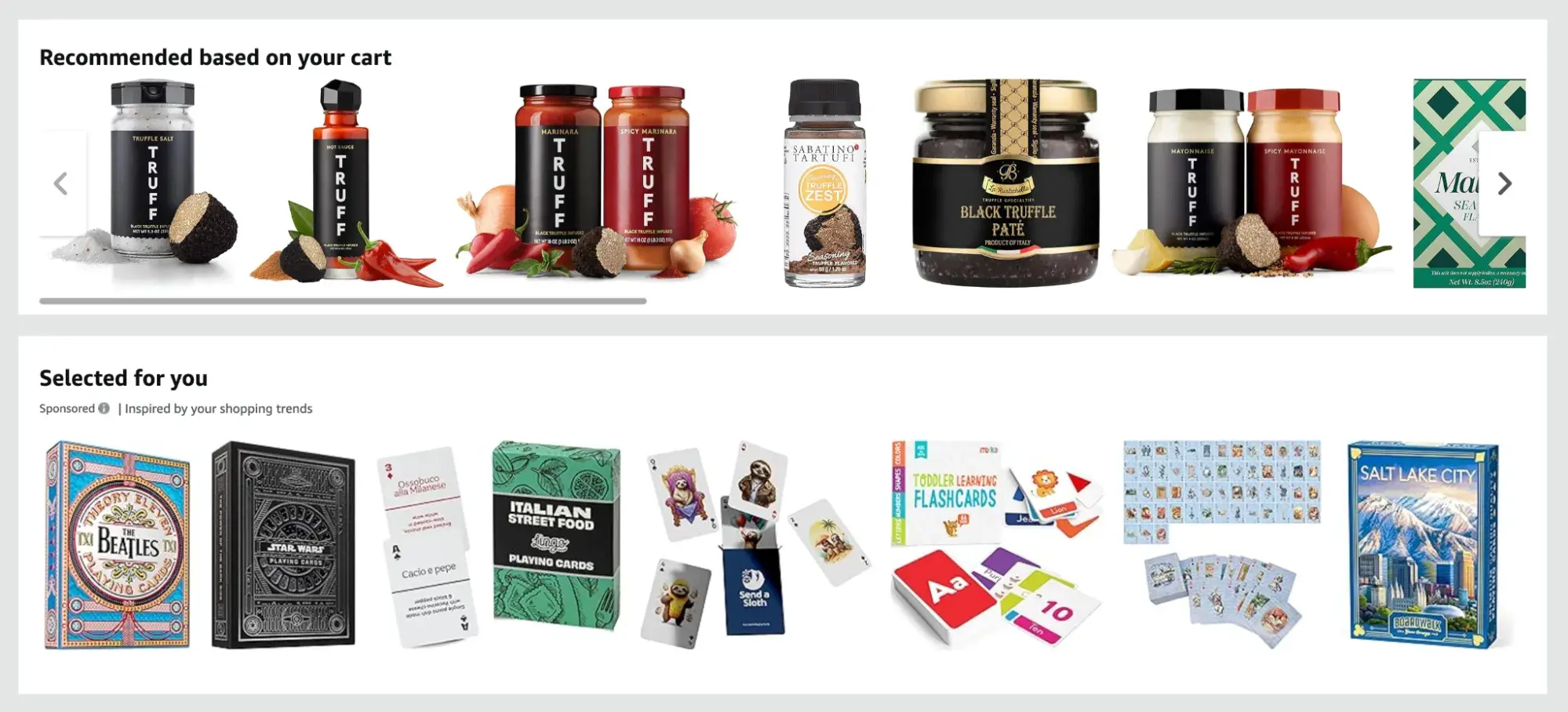
The company’s recommendation system analyzes browsing history, purchase patterns, and even how long you hover over products to surface incredibly relevant suggestions and reminders of what you recently viewed.
They also send automated emails with subject lines like “Today’s deals, Just for you” or “We found something you might like.”
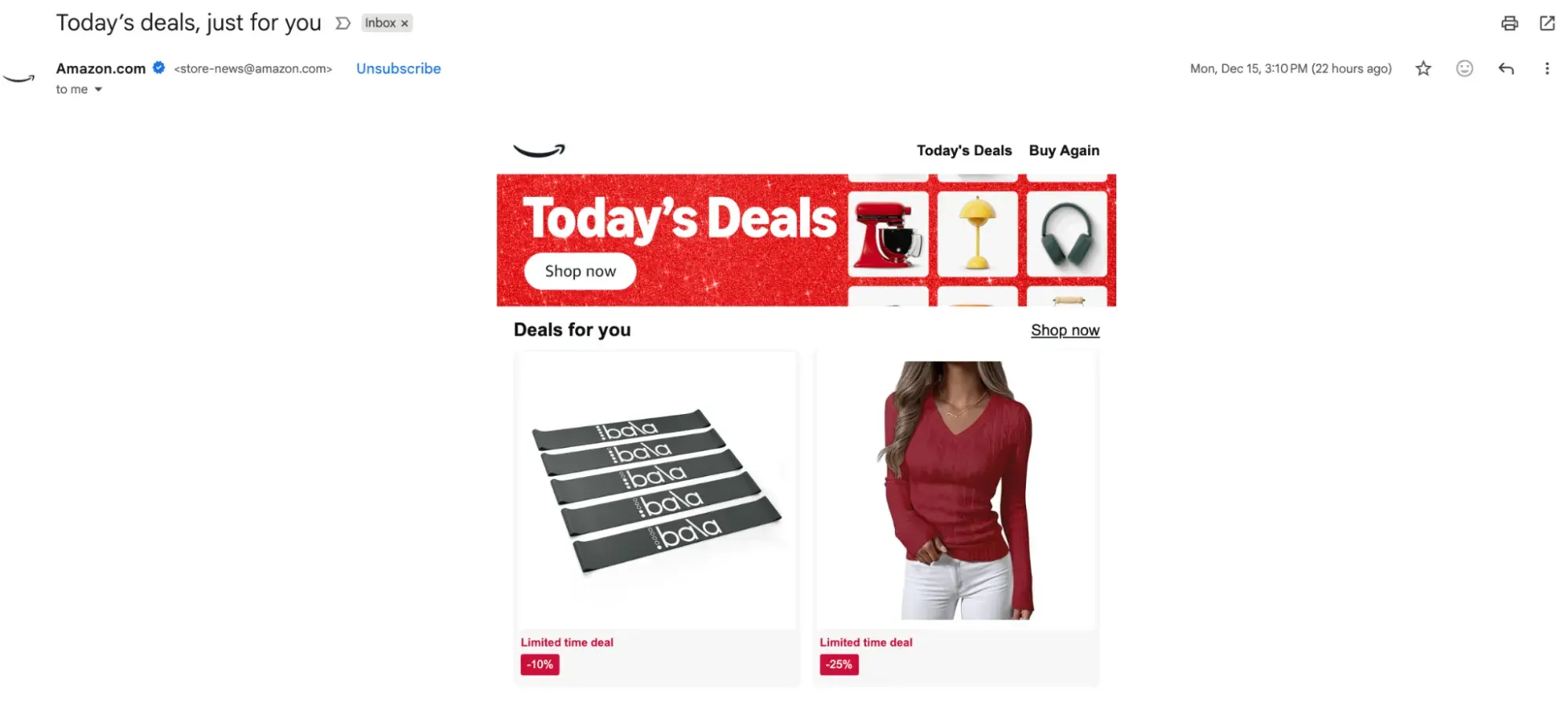
Speaking of email…
2. Email Marketing
While simple, e.l.f. Cosmetics does a nice job of using AI to personalize its email marketing. In this welcome email, for example, you’ll see the company greet the recipient (aka Me) in the subject line as well as the email header.
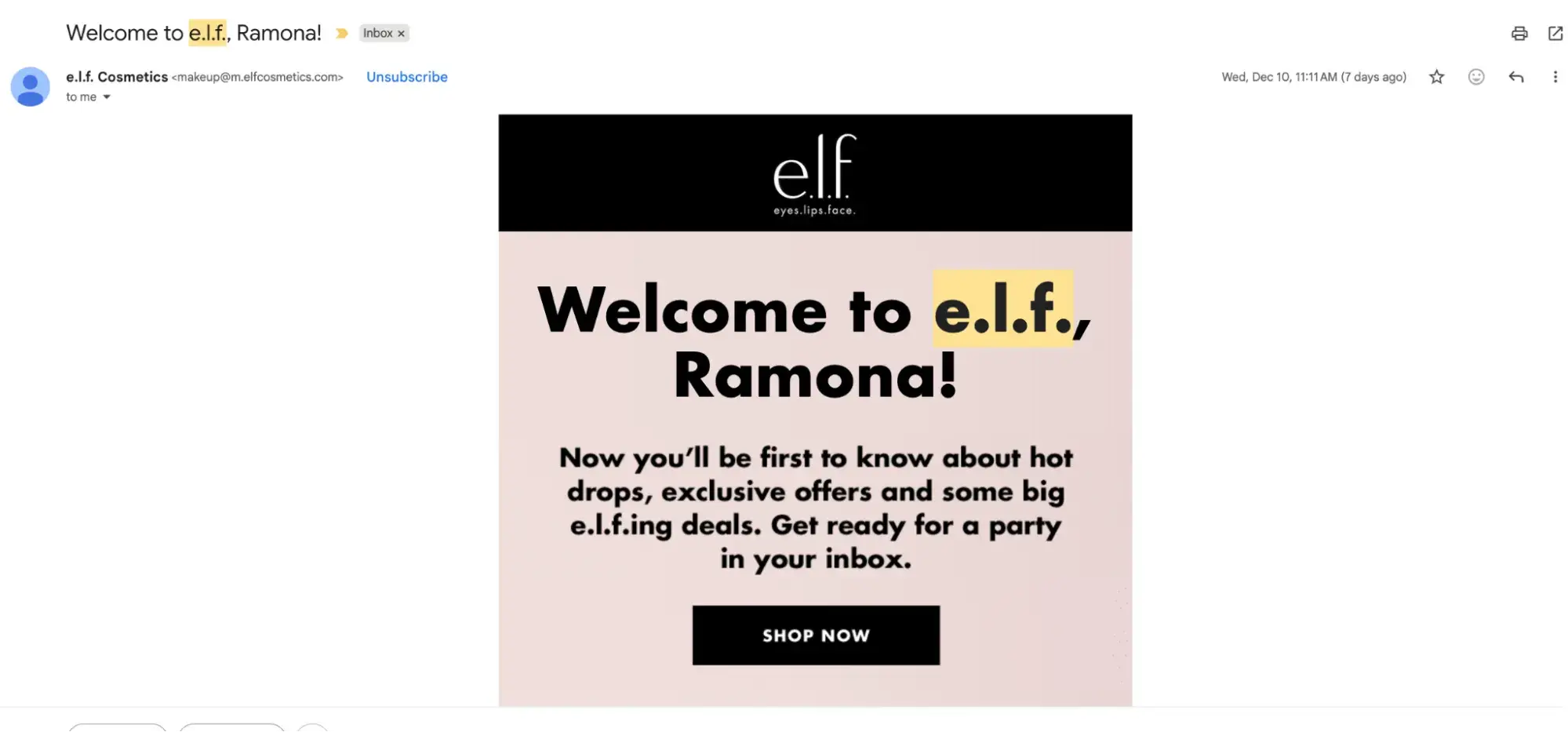
As you scroll, you’ll then see product recommendations based on my previous purchase and browsing history.
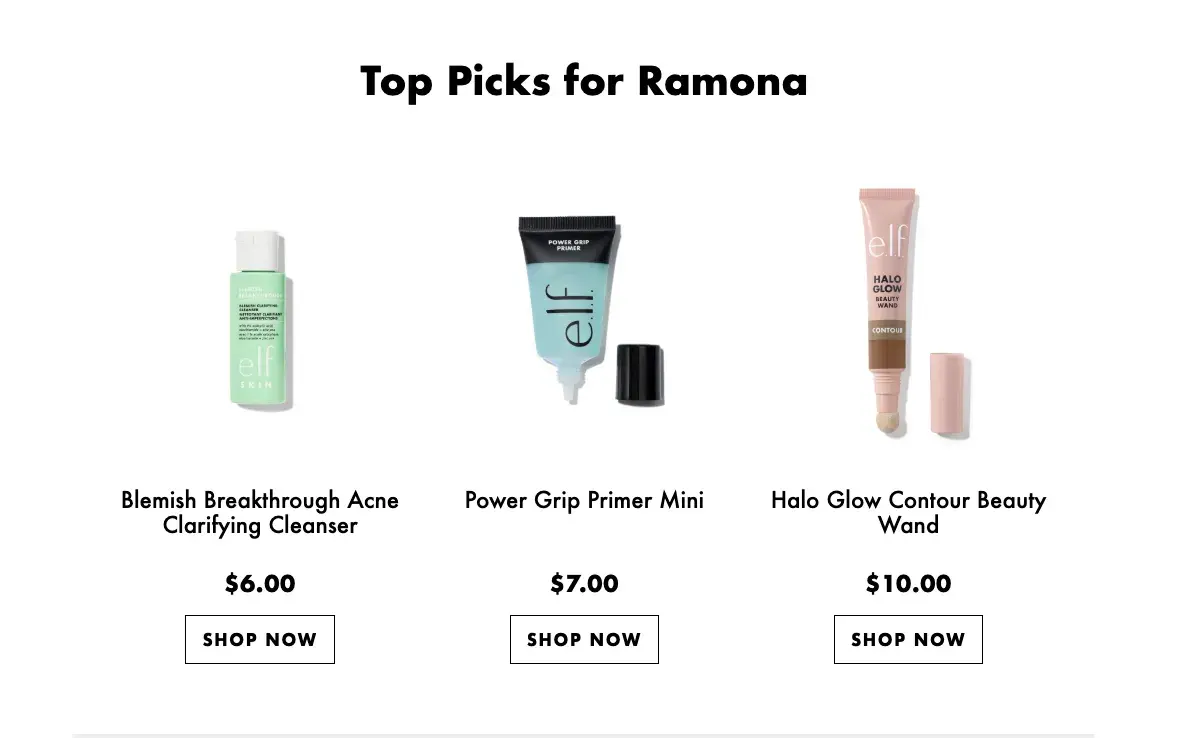
E.l.f.’s reward program also runs a birthday campaign, which one can infer relies on AI to trigger the personalized email based on the contact’s account information.
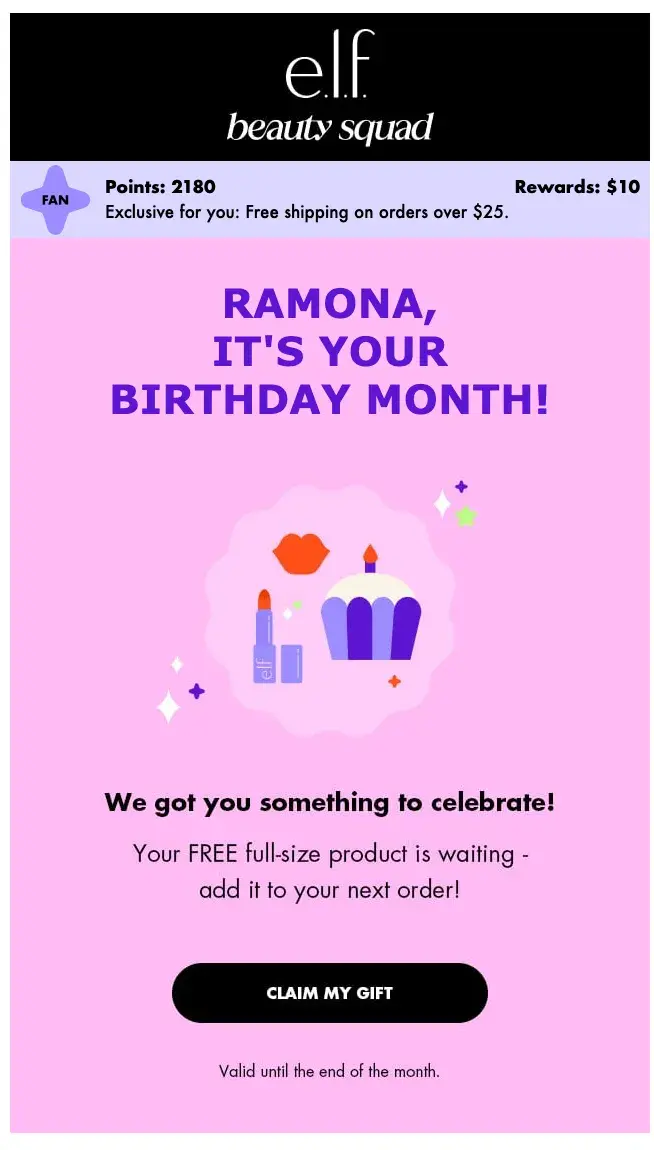
They even include details like my membership tier, point total, and the potential rewards available to them — all of which make the email feel exclusive and can help reengage. These strategies are not groundbreaking by any means, but they are well-executed and compelling.
3. Dynamic Website Personalization
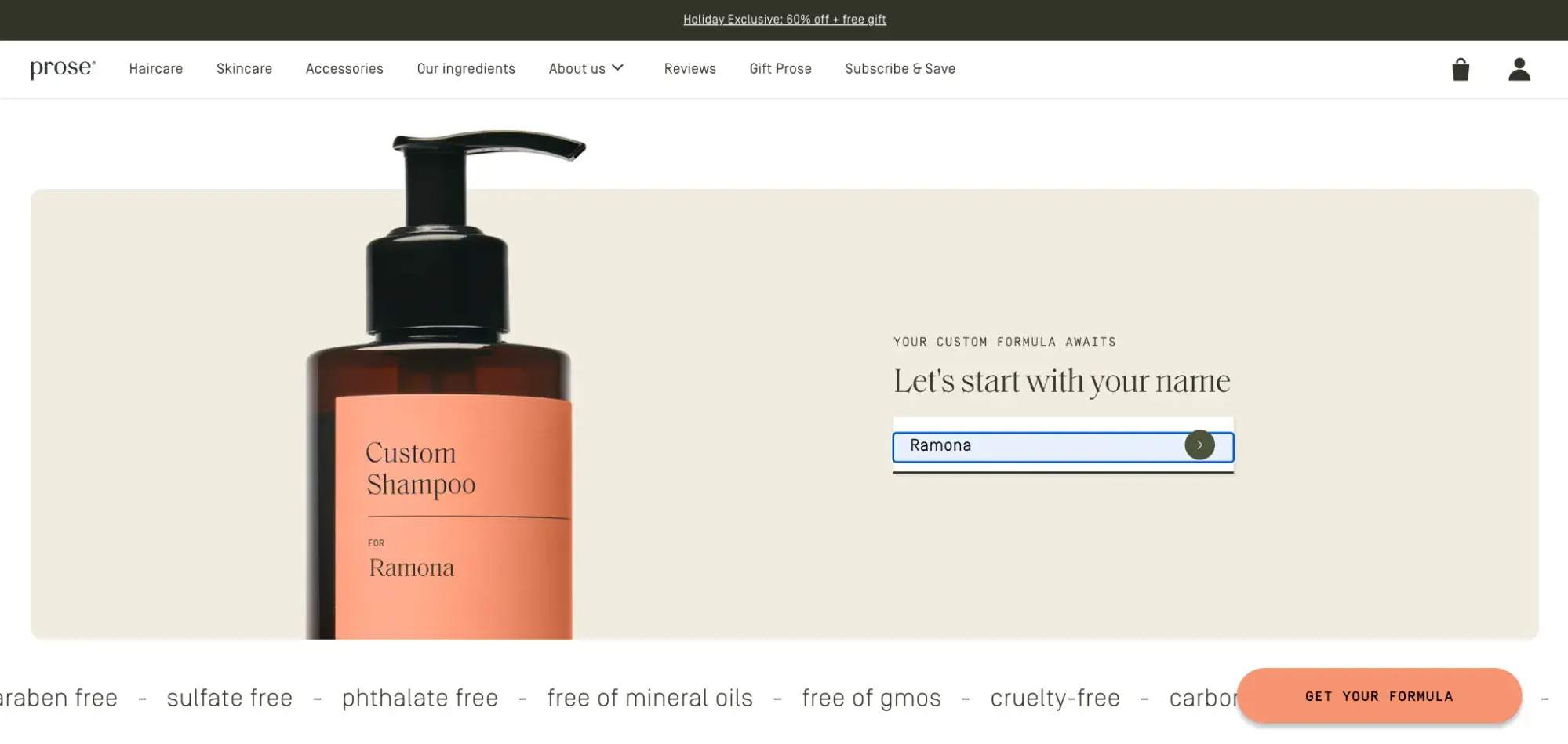
Some of my favorite website personalization can be seen on the prose hair and skincare product website. The personalization is also a great example of service or product curation.
While not automatic upon your first visit, as soon as Prose gathers details about you (i.e., hair type, lifestyle, location), they begin to show you information specific to you. Even throughout the questionnaire, it quickly took what I shared into account and showed information relevant to me.
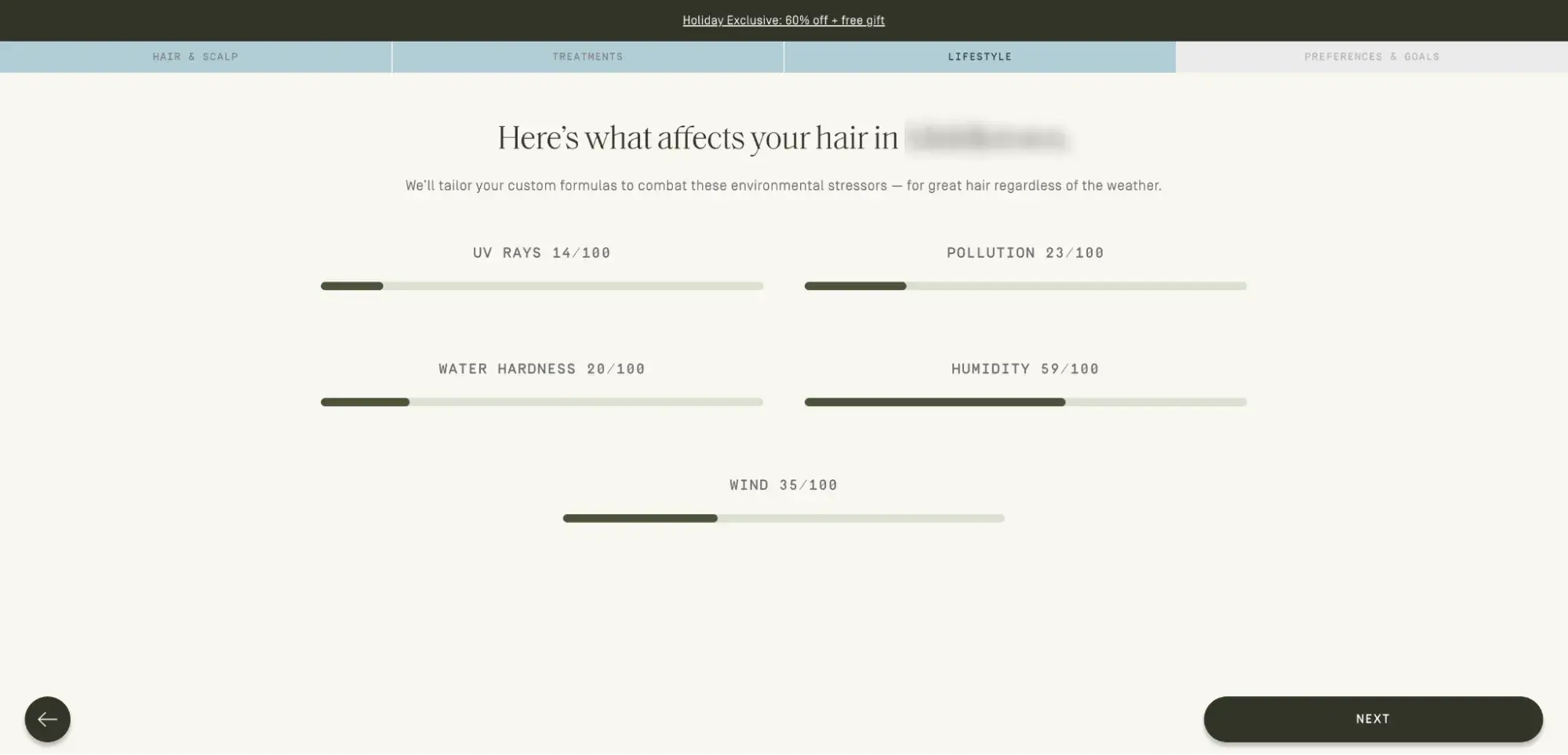
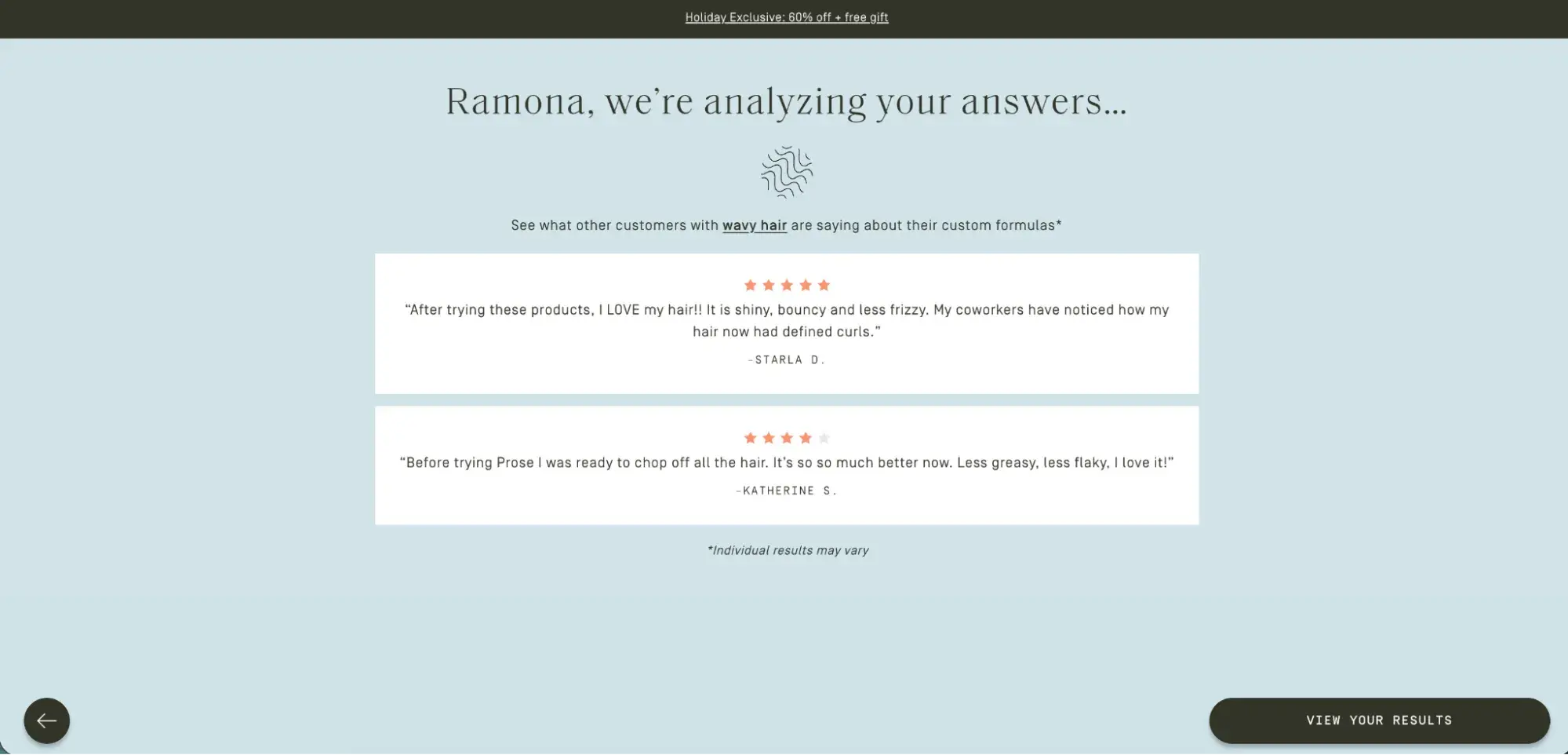
It feels like true analysis and adaptation to your needs, not just a generic addition of a name.
4. Netflix: UX/UI Customization
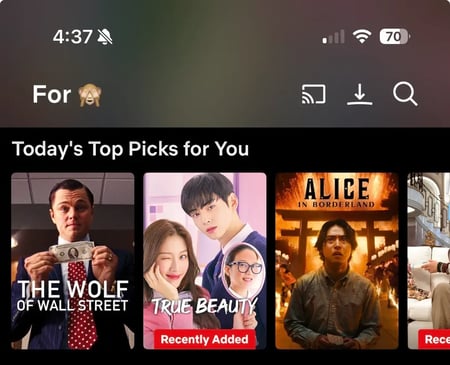
Netflix is known for its content recommendations (like the example above), but its AI personalization goes even further than that. The platform even customizes the artwork you see for shows and movies based on your viewing history.
For example, if you typically watch comedies, you’ll likely be shown a thumbnail with a particularly funny scene or expression from the program (i.e. the image of actor Jason Alexander as George for Seinfeld below).
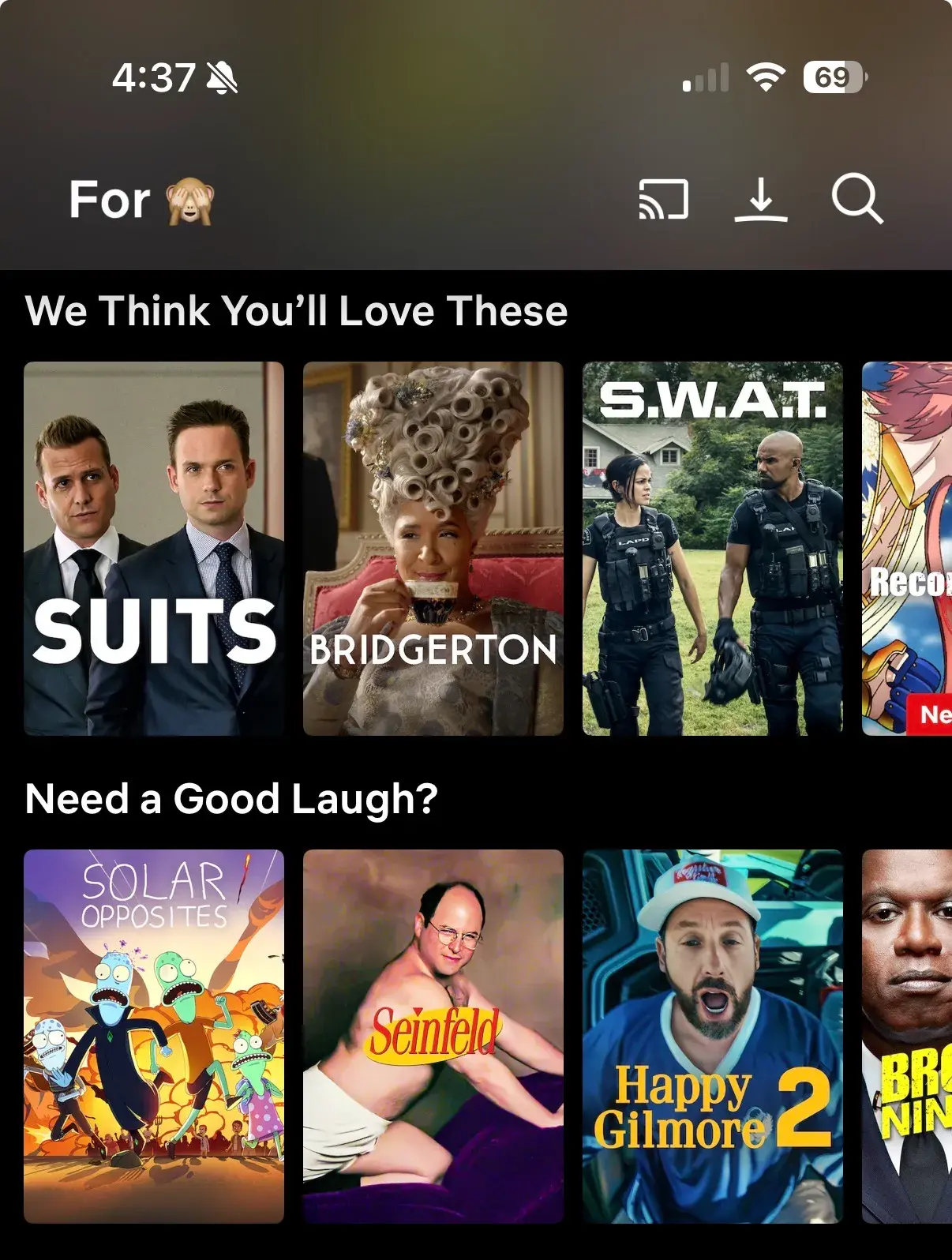
If you just watched a Leonardo DiCaprio blockbuster, they may show you a thumbnail of him for the 1996 film adaptation of Romeo + Juliet rather than Claire Danes. This level of personalization keeps users engaged. Netflix once even credited its recommendation system with saving the company $1 billion annually by reducing churn.
5. Global Localization at Scale
When expanding into new markets, AI can localize your content by automatically translating and culturally adapting it for different regions.
“While AI is not equipped to do full empathy mapping and empathy matching, it does have a strong command of language,” explains Petrullo. “You can use it as an intersection of common language at scale.”
And this goes beyond simple translation. AI can adapt cultural references, adjust tone, and even modify product recommendations based on regional preferences. Take this example from Otis Elevator Company.
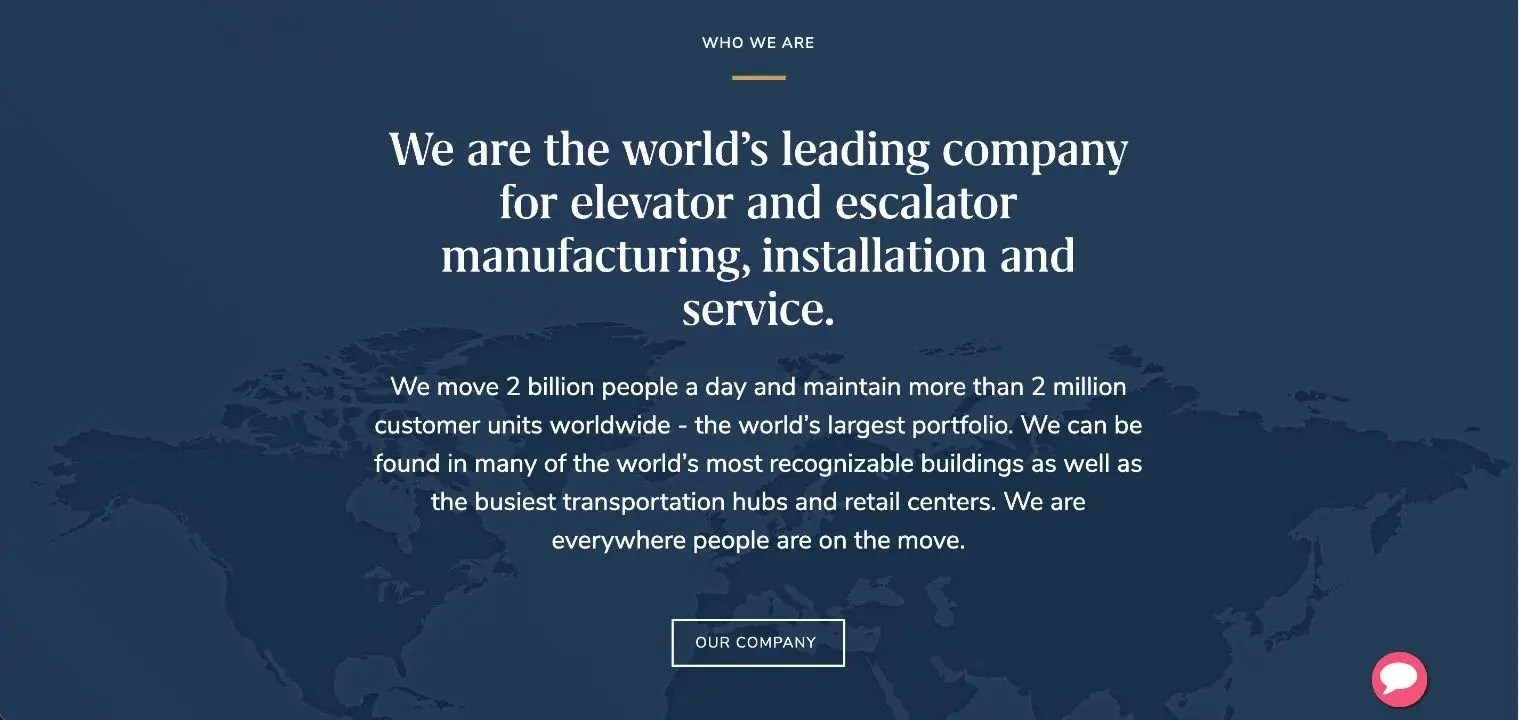
Though a US company, elevator giant Otis does business across the globe. With this in mind, on their UK website, the company shifts its language to refer to elevators as “lifts” to be better understood and resonate with buyers in the region.
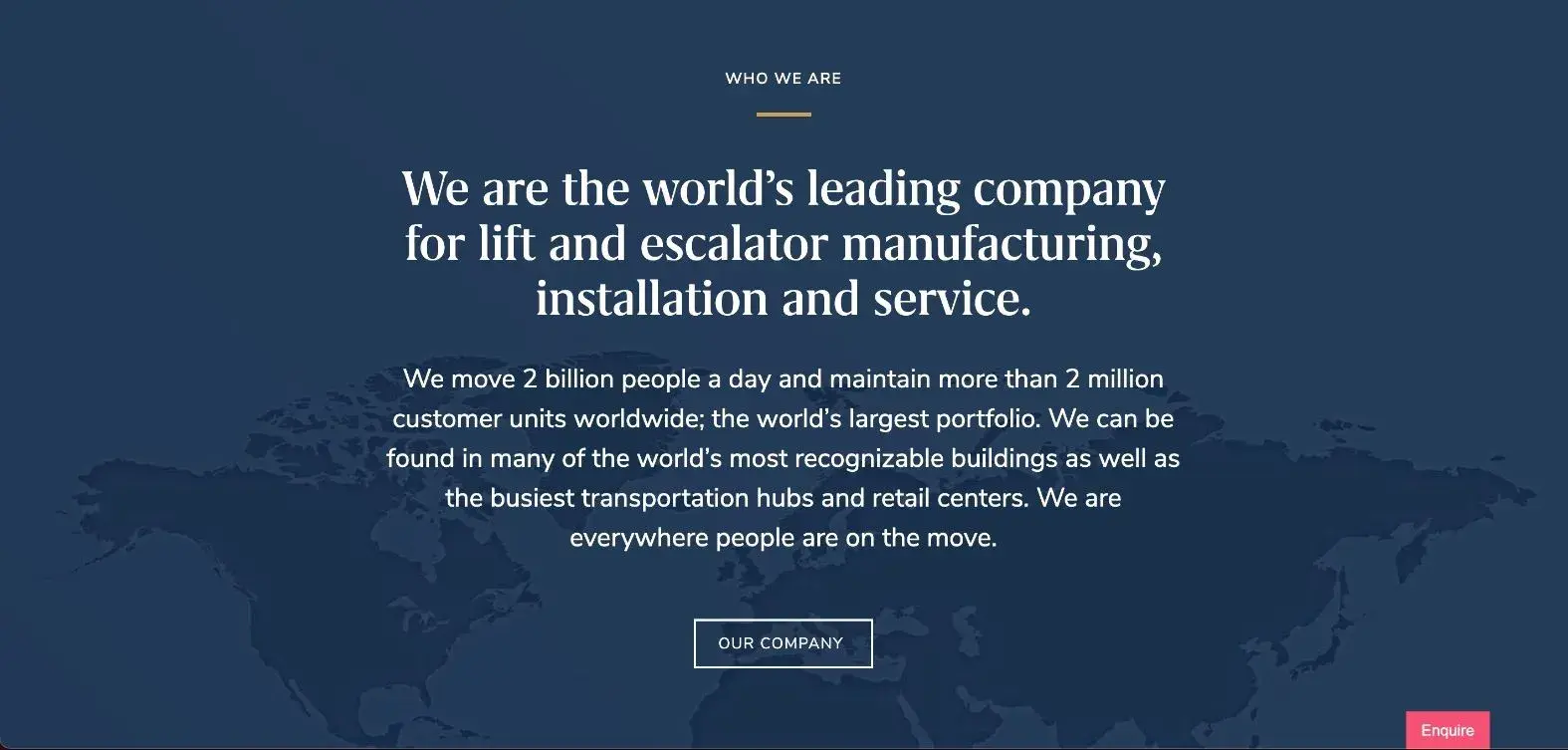
This is a small, but effective change that speaks directly to the customer the website is trying to reach.
6. Upwork: Programmatic SEO
Upwork uses AI to generate thousands of location and service-specific landing pages automatically. Simply search for “freelance graphic designers Austin” or “freelance copywriter Los Angeles,” and you’ll find perfectly tailored pages.
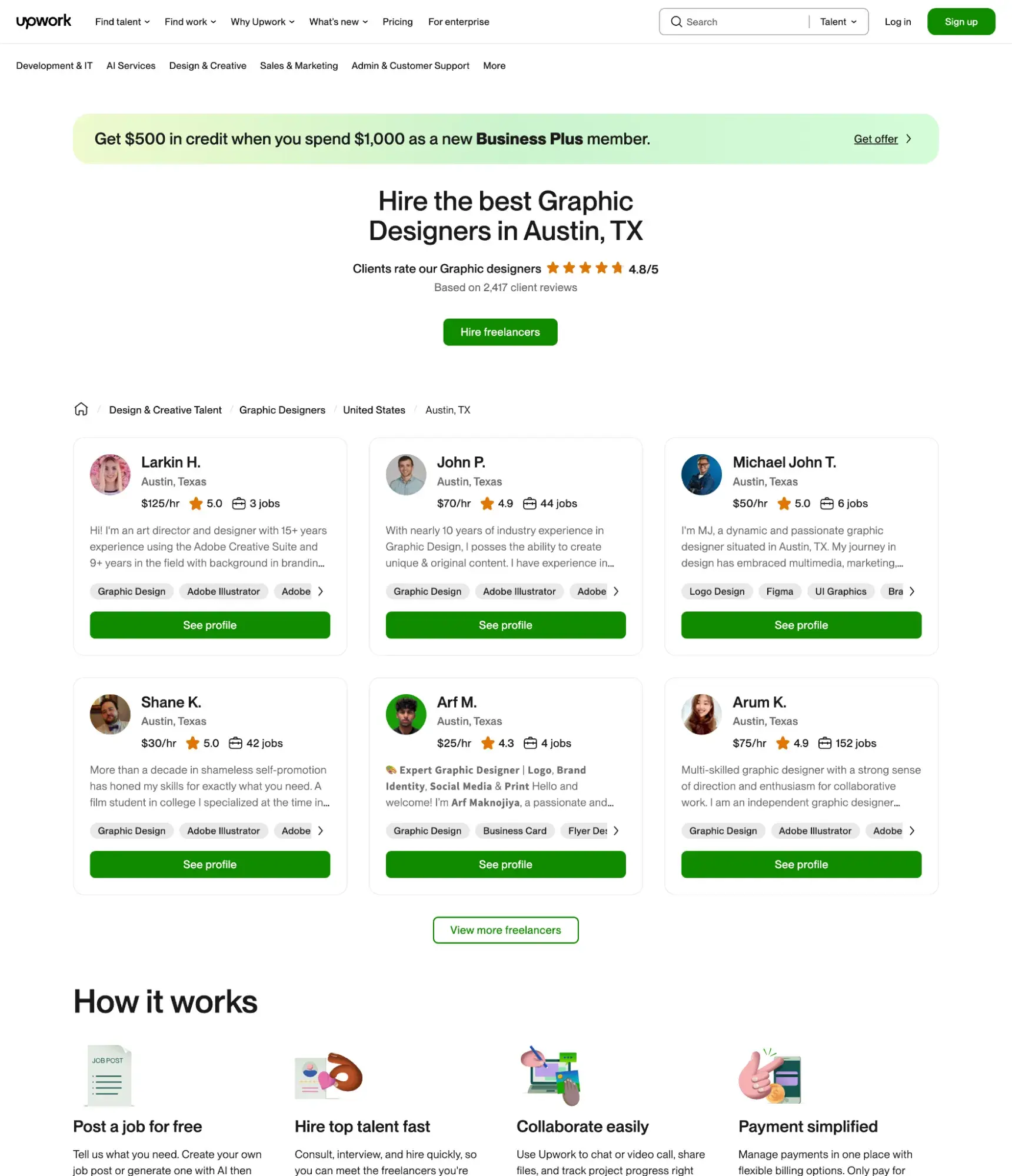
This is something I used to do manually for clients early in my career — It took multiple days, if not longer, depending on the size of their service area or catalog. Being able to automate that process with AI would have dramatically sped up execution and even effectiveness with its additional insights.
AI Personalization Best Practices
Successful AI personalization takes more than just the right tools. It needs the right strategy and approach. Here are some proven practices from organizations that have seen real results to keep in mind.
What are the best practices for implementing AI personalization?
Start with clear goals.
No initiative is successful without clarity around what the point is. In this case, that means defining what personalization can mean for your business. What can it accomplish? What do you need it to do?
Do you need to boost conversion rates, enhance customer retention, or improve the user experience? Set specific, measurable goals before implementation.
Build a unified data source.
AI personalization is only as good as your data. Consolidate customer data from all touchpoints into a single customer view. This includes website behavior, purchase history, support interactions, and engagement across channels.
The HubSpot CRM, with its native connections to the CMS, sales, social, email, and conversion tools, among others, does this for you. But even if you are using third-party tools, there are hundreds of integrations available to bring your data together.
Test and iterate continuously.
Begin with small pilot programs before scaling. A/B test different personalization strategies and use the insights to refine your approach. What works for one segment might not work for another.
Balance personalization with privacy.
Be transparent about data usage and give customers control over their data. Allow them to choose what they share, view what data you’ve collected, and opt out if desired.
Trust is critical to effective personalization; otherwise, it can just come off as invasive and even creepy. Transparency is often also frequently necessary for abiding by laws and government regulations.
Don’t lose your human touch.
Speed and access are some of AI’s greatest strengths. Emotion and connection are not. While AI can certainly help make personalizing typically routine tasks (i.e. transactional emails, ads), it can’t replace true human connection when it
What are the future trends in AI personalization?
As we look ahead, what will AI personalization look like? Let’s take a quick glance at a few trends we predict will emerge most prominently.
Real-time Execution
AI is known for its speed. In the future, I can see real-time execution of personalization as one of its most impactful opportunities. Rather than personalizing based on segments, I’d love to see AI personalization advance to craft truly individual experiences that adapt moment by moment based on context, mood, and intent.
With this comes…
Predictive Personalization
AI will increasingly anticipate customer needs before they’re expressed, proactively offering solutions and recommendations. This comes with analyzing their behavior and that of past buyers to understand the typical buyer’s journey.
Cross-Channel Orchestration
Future AI systems will seamlessly coordinate personalized experiences across all touchpoints, from email to in-store visits, creating a unified customer journey.
Brand consistency is one of easiest ways to lose or win over a consumer, and this includes how the content incorporates personalization. For instance, if one touchpoint recognizes your purchase history, but the next doesn’t, it creates confusion and makes it more difficult to take direct action.
More Focus on Ethics & Privacy
As personalization becomes more prevalent, marketers can expect increased focus on ethical AI practices and giving customers greater visibility into how their data drives personalization. I also wouldn’t be surprised of AI regulations become a bigger point of discussion as rumblings of the need have already begun.
Frequently Asked Questions About AI Personalization in Marketing
What is AI personalization?
AI personalization uses artificial intelligence to analyze customer data and behavior patterns to deliver tailored content, recommendations, and experiences to individual users. Unlike traditional rule-based personalization, AI continuously learns and adapts, creating increasingly relevant interactions over time.
What’s the difference between AI personalization and traditional personalization?
Traditional personalization uses static rules and basic segmentation (like “customers who bought X also bought Y”). AI personalization adapts automatically and at scale, learning from every interaction a customer makes with your brand including website pages they visit and emails they open among other things.
Can you make a personalized AI?
Yes, custom AIs are becoming increasingly accessible to individuals and businesses. With no-code tools like Zapier and Make.com, plus AI platforms like OpenAI, you can create personalized AI assistants for specific needs without extensive programming knowledge. Many marketing platforms now include built-in AI personalization capabilities.
HubSpot is also experimenting with custom agents with Breeze (in beta).
How does Netflix use AI for personalization?
Netflix uses AI to analyze viewing history, time spent on shows, and even when users pause or rewind to create hyper-personalized experiences. The AI uses this information to select which shows to recommend, customizes thumbnail images based on viewing preferences, and even influence the order of content displayed.
Scale your marketing personalization with AI.
If there’s one thing I’ve learned as both a marketer and a consumer, it’s this: great personalization feels like magic, and bad personalization feels like spam. And AI is what finally lets us deliver the magical kind — the kind that makes people pause, smile, click, buy, and come back again.
AI personalization isn’t just about plugging data into an algorithm or tossing a first name into an email subject line. It’s about creating experiences that feel thoughtfully designed for every single person who interacts with your brand. When done well, it’s the closest thing we have to scaling true human connection — without needing 100 clones of your best marketer.
Your customers are telling you what they want with every click, scroll, and search. AI personalizes the way you listen. And when you listen well? They notice.
If you’re ready to try it for yourself (or just curious what’s possible), explore how HubSpot can help you personalize content at scale — no prompt wizardry or coding required.
Editor’s note: This post was originally published in October 2024 and has been updated for comprehensiveness.